

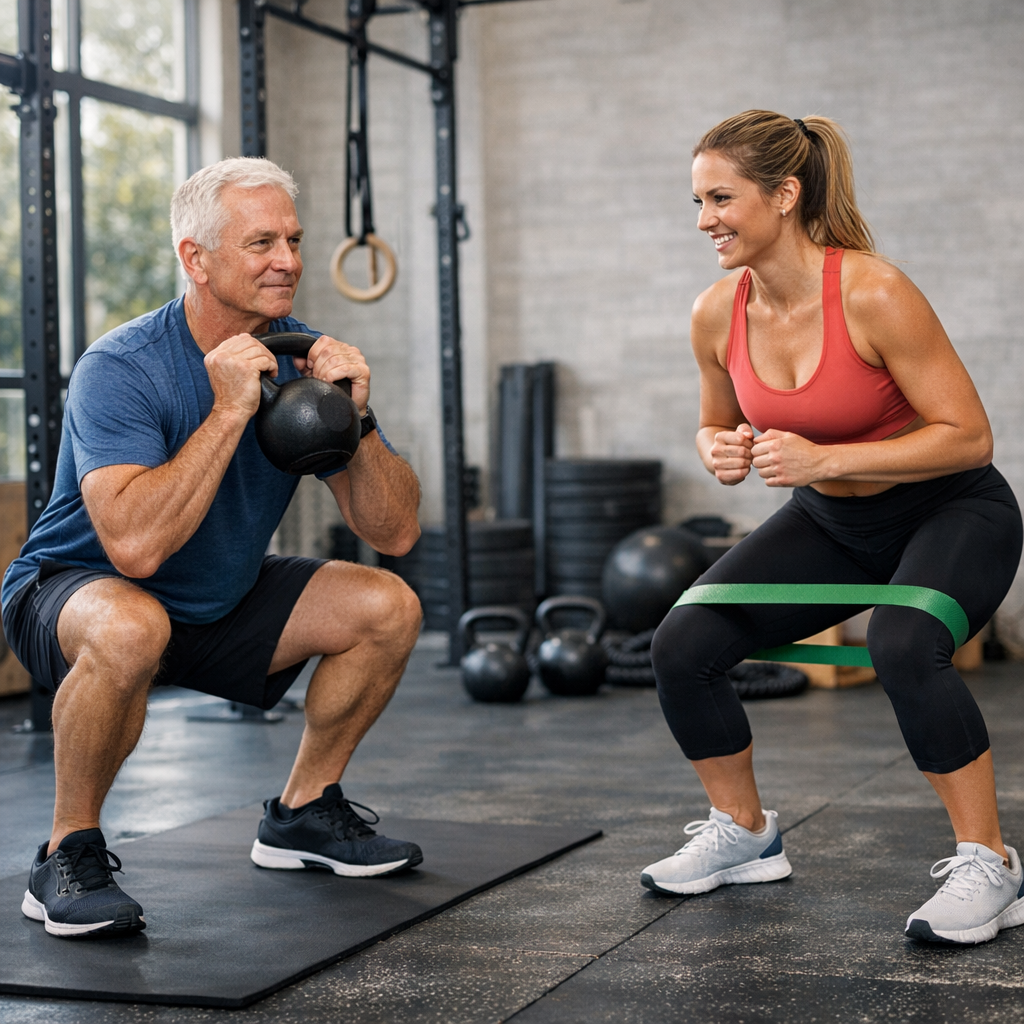
Functional Fitness: Why Training for Real Life Matters More Than Ever
By PumpPal Updated 3 min read
Explore why training your body for real-life movements dramatically improves strength, injury prevention, and long-term quality of life.
What Is Functional Fitness?
Functional fitness means training your body to perform everyday activities safely and efficiently. It focuses on movements that mimic real-world actions like lifting, pushing, pulling, squatting, twisting, and reaching—rather than isolating single muscles. This training approach closely links strength, stability, coordination, balance, and mobility, all of which are crucial for injury prevention and healthy aging.
Core Benefits of Functional Fitness
- Better Quality of Life: Functional training supports the movements you do daily—making tasks from carrying groceries to playing with kids easier and safer.
- Reduced Injury Risk: Building strength with proper mechanics means your joints and muscles are better prepared for everyday demands, reducing the chance of tweaks and strains.
- Greater Mobility & Stability: Multiplanar movements train your stabilizing muscles, leading to more robust support for all types of activities.
- Improved Athletic Performance: For both athletes and weekend warriors, increased whole-body coordination and power translates to better results in sports and recreation.
Essential Functional Fitness Exercises
- Squats: Develops lower body strength for lifting and lowering.
- Deadlifts: Teaches safe lifting mechanics for heavy objects.
- Push-Ups and Pull-Ups: Expand core stability and upper body strength applicable in pushing and pulling actions.
- Lunges and Step-Ups: Replicate walking, climbing stairs, and balance tasks.
- Carrying Movements (e.g., Farmer's Carry): Builds grip, posture, and overall strength for daily carrying tasks.
How to Structure a Functional Fitness Program
A typical functional fitness routine blends strength and mobility work. Aim for sessions that incorporate multi-joint, multiplanar exercises, both for upper and lower body. For beginners, 2-3 full-body sessions per week is ideal, adding in mobility drills and activating your core every time. Intermediate and advanced exercisers can include more complexity and intensity with resistance, functional circuits, and balance challenges.
Example Workout
- Squat to Press: 3 sets of 12
- Walking Lunges: 3 sets of 16 steps
- Bent-over Row: 3 sets of 10
- Plank w/ Shoulder Tap: 3 sets of 30 seconds
- Farmer's Carry: 3 rounds of 30 meters
Tracking Functional Fitness Progress
Measuring improvements in functional fitness isn't about single-rep max weights—it's about feeling stronger and more agile in daily life. Still, tracking your reps, weights, and rate of perceived exertion (RPE) helps highlight growth. Using PumpPal, you can log these metrics, track body measurements, and upload progress photos to see your form improve over time. Having your functional progress visualized keeps motivation high and lets you tweak your plan as needed.
Integrating Functional Training for Longevity
Research continues to show that regular movement and functional strength are vital for healthy aging. Training for balance, flexibility, and coordinated power helps protect you from falls, support your joints, and grant you the independence to enjoy life longer. Experts recommend all adults, regardless of age, integrate some functional training as part of their weekly routine.
Final Thoughts
Functional fitness is more than a trend—it's a foundational investment in living well, feeling confident, and protecting yourself from future injury. Whether you're just starting or looking for a new challenge, building a plan around real-life movement pays lifelong dividends. Track your progress with PumpPal to stay motivated and see your improvement with data, measurements, and photos all in one app.