

Morning Workout Nutrition: What to Eat Before and After
By PumpPal Updated 8 min read Editorial standards
Learn when to eat before an early workout, what fasted training really changes, how to hydrate, and what to include in a practical post-workout breakfast.
The best morning-workout nutrition plan depends on the session and your stomach. For a short, easy workout, water and breakfast afterward may be enough. Before hard lifting, intervals, or longer endurance work, a small carbohydrate-rich snack can improve comfort and training quality. Afterward, eat a normal meal with protein, carbohydrate, and fluids rather than racing a rigid 30-minute clock.
You do not have to train fasted, and you do not have to force down a full breakfast at 5 a.m. Start with the smallest meal that supports the work, then adjust from performance, hunger, digestion, and your overall nutrition goals.
Morning Workout Nutrition at a Glance
| Situation | Before training | After training |
|---|---|---|
| Short, easy session under about 60 minutes | Water; optional small snack if hungry | Normal balanced breakfast |
| Hard lifting or intervals | Easy-to-digest carbohydrate; add protein if time allows | Protein, carbohydrate, and fluids |
| Long endurance session | More carbohydrate and fluid; practice the plan in training | Replace fluid and eat carbohydrate plus protein |
| Fasted by preference | Water; stop if dizzy, weak, or unwell | Eat soon enough to support the rest of the day |
The joint Academy of Nutrition and Dietetics, Dietitians of Canada, and ACSM position statement emphasizes that food and fluid strategies should match the athlete, activity, and environment. There is no single breakfast or timing rule that fits every morning session.
Do You Need to Eat Before a Morning Workout?
No, not for every workout. A healthy adult may tolerate a short session after an overnight fast, especially at an easy intensity. Eating first becomes more useful when the workout is long, intense, high-volume, or performance-focused, or when fasted training leaves you hungry, distracted, lightheaded, or unable to match your usual work.
Overnight fasting does not mean every muscle is empty of glycogen. Liver glycogen falls while you sleep, but muscle fuel depends on the previous day's diet and training. The practical question is whether you can complete the planned session with acceptable energy, technique, and effort.
Fasted vs. Fed Morning Training
Fasted exercise can increase fat use during that particular session, but burning more fat during one workout is not the same as losing more body fat over time. Total energy intake, diet quality, training, and adherence drive longer-term changes.
A 2025 systematic review of fasted versus fed resistance training found no clear differences in strength, muscle growth, or fat-free mass, but only four studies qualified and three had high risk of bias. That is not strong evidence that fasted lifting is superior. Treat it as a preference and tolerance decision, not a fat-loss requirement.
If you train well without food and can meet your daily nutrition needs, fasted training can be workable. If performance or well-being declines, eat something. There is no prize for completing a worse workout on an empty stomach.
What to Eat Before a Morning Workout
If you have 15 to 30 minutes
Choose a small, low-fiber carbohydrate that digests easily. Examples include a banana, applesauce, toast, a rice cake, or a small amount of sports drink. Keep the portion modest and avoid trying an unfamiliar food before an important session. Reducing fiber immediately before a hard workout is a comfort strategy, not a recommendation to eat a low-fiber diet; see the daily fiber guide for muscle gain and fat loss for the broader context.
If you have 30 to 90 minutes
Use carbohydrate with a modest amount of protein. Options include yogurt with fruit, toast with an egg, cereal with milk, a small smoothie, or oats in a portion you tolerate. Limit large amounts of fat and fiber immediately before hard exercise if they cause stomach discomfort.
If you have two hours or more
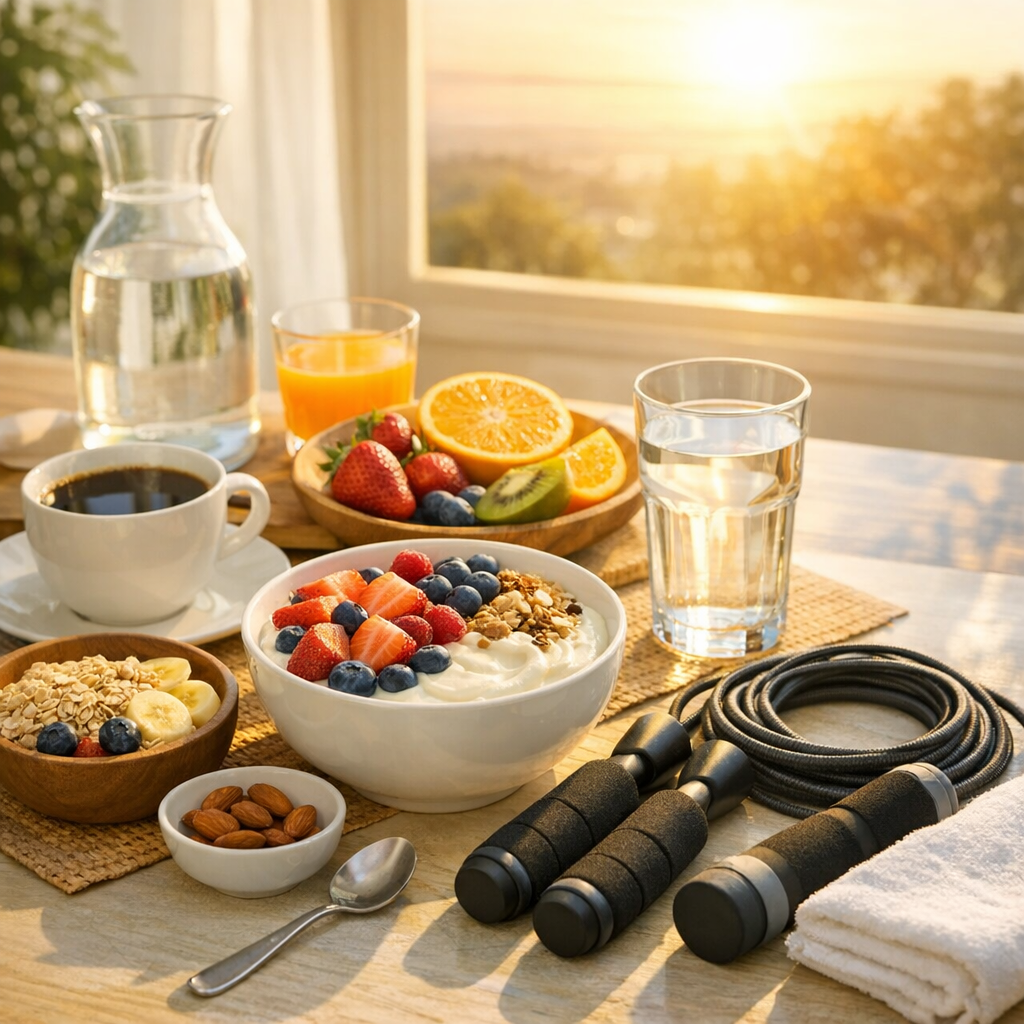
A regular breakfast can work: oatmeal with yogurt and fruit, eggs with toast and fruit, or rice with lean protein. The meal does not need to be a special fitness recipe. It needs to provide useful fuel without leaving you uncomfortably full.
Build the portion around the planned work. A 30-minute walk and a two-hour cycling session do not require the same pre-workout meal.
How Much Carbohydrate Do You Need?
Carbohydrate supports higher-intensity work and longer sessions, but there is no universal pre-workout gram target for recreational lifters. Your needs change with workout duration, training volume, total daily intake, and the time since your last meal.
For short strength sessions, a piece of fruit or toast may be enough when a snack is needed. Endurance athletes preparing for long or demanding sessions may need a larger, practiced carbohydrate plan. If you are training for an event, a sports dietitian can personalize the amount and timing.
Protein Before or After Morning Training
Daily protein intake and its distribution across meals matter more than finding one perfect minute. The NIH performance-nutrition fact sheet summarizes athlete protein needs broadly at about 1.2 to 2.0 grams per kilogram per day and cites about 0.3 grams per kilogram of high-quality protein after exercise as a practical meal target.
If you eat protein before training, breakfast afterward does not need to happen immediately. If you trained fasted, eating a protein-containing meal reasonably soon is practical. Eggs, Greek yogurt, milk, soy foods, lean meat, beans, or a protein shake can all contribute. Read the protein and recovery guide for more context.
Hydration Before an Early Workout
You lose water overnight, but waking up does not automatically mean you are dangerously dehydrated. Drink to address thirst and start the session comfortable. A glass of water with breakfast or a snack works for many people; larger fixed amounts are not necessary for everyone.
Water is usually enough for a standard gym session under an hour. Electrolytes become more relevant with long sessions, heavy sweating, hot conditions, or a short turnaround between workouts. More is not always better: excessive fluid intake can also be harmful.
Use practical signals such as thirst, urine color trends, sweat loss, and body-weight changes around long sessions. People with heart, kidney, blood-pressure, or fluid-balance conditions need individualized medical guidance.
Do You Need Fuel During the Workout?
Most recreational strength workouts under about 60 minutes need only water. During longer endurance work or very high-volume sessions, carbohydrate and electrolytes may help maintain output. Practice the exact food or drink during training instead of introducing it on race day.
A normal morning workout does not require BCAAs, an intra-workout powder, or a multi-ingredient drink. The evidence-based supplement guide explains which products have a useful role and which usually duplicate a complete diet.
What to Eat After a Morning Workout
Build breakfast around three jobs:
- Protein: supports repair and adaptation.
- Carbohydrate: replaces fuel, especially after longer or harder work.
- Fluid: replaces sweat losses and supports the rest of the day.
Examples include eggs, toast, and fruit; yogurt, oats, and berries; tofu with rice and vegetables; or a smoothie plus a solid meal when appetite returns. Add fats and fiber based on your normal dietary needs and tolerance.
The recovery window is not a 30-minute emergency. Eating sooner matters more when you trained fasted, completed a long session, or will train again later that day. Otherwise, a normal meal within the next few hours is generally practical.
Adjust the Plan to Your Goal
Fat loss
Do not use fasted exercise as permission to ignore total intake. Choose the approach that helps you train consistently and maintain an appropriate calorie deficit. A pre-workout snack can fit a fat-loss plan if it improves training or prevents excessive hunger later.
Muscle gain
Prioritize enough total calories and protein across the day. Morning lifters who struggle to eat large breakfasts can split intake into a small pre-workout snack, breakfast afterward, and another meal later.
Endurance performance
Long runs, rides, and high-volume sessions rely more heavily on carbohydrate and fluid planning. Increase the pre-workout meal gradually and practice during normal training.
Common Morning Nutrition Mistakes
- Copying someone else's exact meal: digestion and training demands differ.
- Calling fasted training a fat-loss shortcut: acute fat use does not guarantee greater long-term fat loss.
- Forcing a large breakfast: start smaller when early food causes nausea.
- Using too much caffeine: a pre-workout that harms sleep can undermine recovery.
- Changing several variables together: test one meal, portion, or timing change at a time.
How to Find Your Best Morning Routine
- Choose two or three comparable workouts.
- Keep the planned exercises and effort target similar.
- Test one pre-workout option at a consistent time.
- Record completed load, repetitions, session effort, hunger, and stomach comfort.
- Keep the option that supports performance without unnecessary complexity.
Use PumpPal to compare the workout itself, including loads, sets, repetitions, and exercise history. Pair those records with your nutrition notes outside the app so a good or poor session is not judged from memory alone. The long-term tracking guide shows how to compare sessions fairly.
This article provides general educational information for adults and is not medical advice. People who are pregnant or breastfeeding, under 18, managing diabetes or another medical condition, taking medication, or experiencing recurring dizziness, fainting, or gastrointestinal symptoms should seek qualified medical or nutrition guidance.
Morning Workout Nutrition FAQ
Is it okay to work out first thing without eating?
It can be okay for a healthy adult during a short session if energy, performance, and well-being remain acceptable. Eat first when fasting causes weakness, dizziness, poor performance, or excessive hunger.
What is the best quick food before a morning workout?
A small, easy-to-digest carbohydrate such as a banana, applesauce, toast, or a rice cake is a practical starting point. Choose a food you already tolerate.
Do fasted workouts burn more fat?
They can increase fat use during the session, but that does not prove greater long-term body-fat loss. Overall energy intake, diet quality, training, and consistency matter more.
How soon should I eat after a morning workout?
There is no universal 30-minute deadline. Eat a balanced meal reasonably soon, especially after fasted, long, or demanding training or when another session is scheduled that day.
Do I need electrolytes for a morning workout?
Usually not for a typical session under an hour in comfortable conditions. They are more relevant during long exercise, heavy sweating, heat, or rapid recovery between sessions.
Bottom Line
Match morning nutrition to the session. Use water and a small carbohydrate-rich snack when needed, eat protein and carbohydrate across the day, and stop treating fasted training or a rigid anabolic window as requirements. The best routine is the one that supports repeatable performance, digestion, recovery, and your overall goal.