

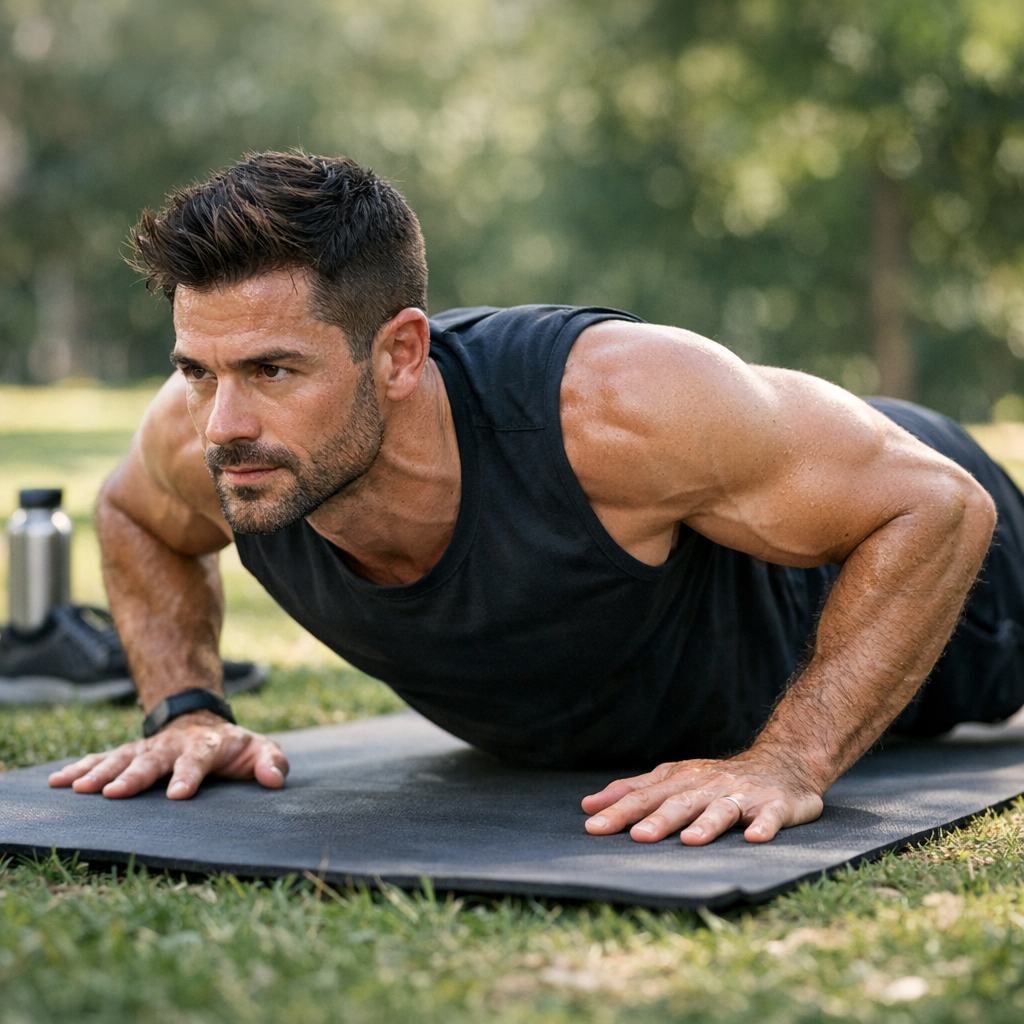
Bodyweight Strength Training: Proven Routines for Any Level
By PumpPal Updated 3 min read
Don’t have access to a gym? You can still get stronger and build muscle with effective bodyweight routines for all levels. Learn how to progress, key exercises, and how to track your improvements for lasting gains.
Introduction: Why Bodyweight Strength Training Works
You don’t need a gym full of barbells to build muscle and strength. Bodyweight training—using your own mass as resistance—remains one of the most accessible, adaptable, and effective ways to get fit. Whether you’re a beginner, returning from injury, or a seasoned lifter looking to master your body, bodyweight routines offer scalable challenges with minimal equipment and maximum results.
The Advantages of Bodyweight Training
- No Equipment Needed: Train anywhere—home, park, hotel room.
- Functional Strength: Improve control, balance, and athleticism with compound movements.
- Customizable Workouts: Easily tweak intensity for any fitness level.
- Low Impact Options: Safe for joints when performed with proper form.
Core Principles for Building Strength with Bodyweight Exercise
- Progressive Overload—Add reps, increase sets, decrease rest, or advance to harder variations (e.g., from incline to standard pushup to diamond pushup).
- Consistency—Regular sessions are key to muscle adaptation. Tracking your workouts helps maintain progress.
- Full Range of Motion—Focus on quality, controlled movements and good form for maximal stimulus and injury prevention.
Beginner Bodyweight Strength Routine
- Squats — 3 sets of 10-15 reps
- Knee Pushups — 3 sets of 8-12 reps
- Glute Bridges — 3 sets of 12-15 reps
- Plank — 3 sets of 20-30 seconds
Rest 1-2 minutes between sets. Complete this total-body circuit 2-3 times per week, gradually increasing reps and sets as you build strength.
Intermediate Routine
- Split Squats — 3 sets of 12 reps per leg
- Standard Pushups — 3 sets of 10-15 reps
- Chin-Ups or Assisted Chin-Ups — 3 sets of 5-8 reps
- Leg Raises — 3 sets of 10-12 reps
Add circuits and reduce rest to push your endurance and muscle adaptation. Use tracking to monitor improvement and stay motivated.
Advanced Bodyweight Strength Routine
- Pistol Squats — 3 sets of 5-8 reps per leg
- Decline or Diamond Pushups — 3 sets of 10-15 reps
- Pull-Ups — 3 sets of 8-12 reps
- Dragon Flags or Hanging Leg Raises — 3 sets of 6-10 reps
Focus on challenging variations, perfect form, and increased time under tension.
Tracking Progress: The Key to Results
Whether you’re hoping to master pushups or achieve your first pull-up, tracking reps, sets, progress photos, and body measurements helps keep you accountable and highlights your progress. Use dedicated workout tracking apps (like PumpPal) to design custom bodyweight plans, monitor improvements, and visualize your evolution over time.
Bodyweight Strength Training FAQs
Can I really build muscle with bodyweight exercises?
Absolutely! Progressive overload, good form, and consistency matter more than equipment. As you master movements, choose harder variations or increase reps to keep growing stronger.
How many days per week should I do bodyweight workouts?
2-5 days per week, depending on your level and recovery ability. It’s best to start with 2-3 and build from there.
Should I track my bodyweight progress?
Yes—logging your routines, body measurements, and progress photos helps you stay motivated and spot plateaus early for timely adjustments.
Conclusion: Take Your Strength Anywhere
Bodyweight strength training is versatile, scalable, and effective for anyone. Focus on progressive routines, perfect your form, and use smart tracking tools to stay accountable and celebrate your journey—no gym required. With strategic effort, your body becomes the only gym you ever need.