

One-Arm Chin-Up Negative exercise
A bodyweight drill to build strength and control for one-arm chin-ups, focusing on the lowering phase.
Updated By PumpPal
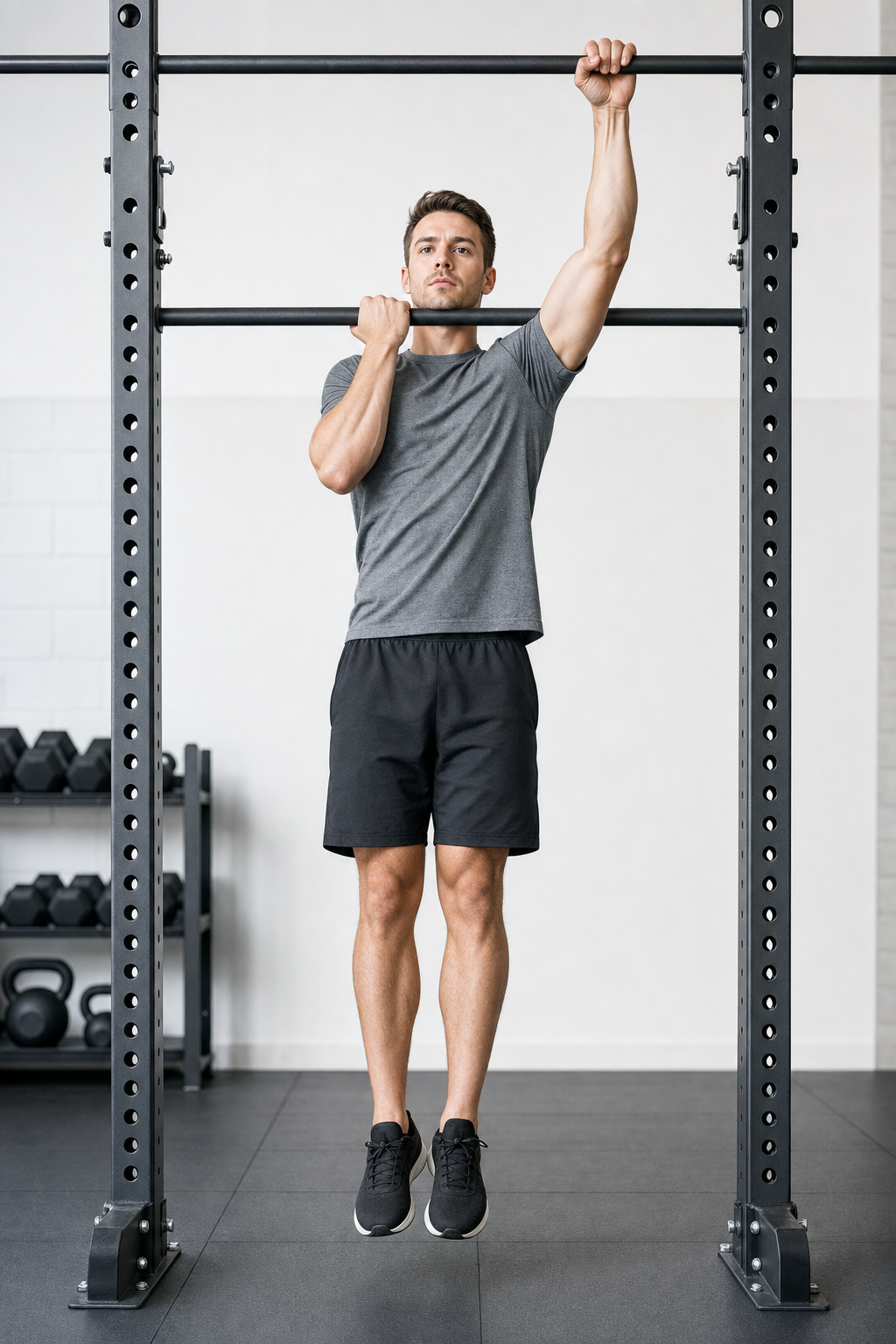
How to perform One-Arm Chin-Up Negative
- Use a pull-up bar and start with your chin above the bar using one arm.
- If needed, use the other hand for assistance on the bar or a support.
- Slowly lower yourself down with one arm.
- Keep your body steady and controlled.
- Fully extend your arm at the bottom and repeat.
What is One-Arm Chin-Up Negative?
The one-arm chin-up negative is an advanced lowering-only repetition performed from the top of an underhand one-arm chin-up. The free hand may provide measured assistance during early progressions, but the working arm and shoulder control the descent.
What muscles does One-Arm Chin-Up Negative work?
The working-side biceps, brachialis, brachioradialis, lat, rear shoulder, and upper back resist the descent. The forearm, grip, rotator cuff, lower traps, abdominal wall, obliques, glutes, and spinal stabilizers limit rotation and swinging.
One-Arm Chin-Up Negative form cues and common mistakes
- Build strong two-arm chin-ups and controlled assisted one-arm work first, then reach the top from a box or measured assistance instead of jumping into the working shoulder.
- Use a secure underhand grip and keep the shoulder connected as the free hand holds the bar, wrist, strap, or support only as much as needed.
- Lower over three to eight steady seconds while keeping the trunk braced and avoiding a sudden drop through the weakest part of the range.
- Finish only to the deepest comfortable position you can control, return the feet to support, and reset rather than performing repeated uncontrolled drops.
- Keep volume low because heavy eccentrics stress the elbow and biceps, and stop for sharp finger, wrist, elbow, biceps, shoulder, or neck pain.
How to add One-Arm Chin-Up Negative to a workout
Practice one-arm chin-up negatives while fresh and after a thorough pulling warm-up. Begin with 3 to 5 sets of 1 to 3 assisted descents per side using a three- to five-second lower and long rest. Reduce assistance before extending the tempo or adding repetitions.
Frequently asked questions
How slow should a one-arm chin-up negative be?
Start with a smooth three- to five-second descent. Build toward longer lowers only if the speed stays controlled through the full comfortable range without shoulder elevation or elbow pain.
How can I make one-arm chin-up negatives easier?
Use the free hand on the bar, working wrist, a strap, or another support to share the load. Use enough assistance to prevent sudden drops and reduce it gradually.
Are one-arm negatives enough to achieve a one-arm chin-up?
They can build specific lowering strength, but most athletes also need strong two-arm chin-ups, assisted one-arm pulls, scapular control, grip work, and enough recovery between hard sessions.
Use controlled movement and an appropriate variation for your current ability. Stop if an exercise causes sharp pain, and seek qualified guidance when needed.