

T-Bar Row exercise
A compound back exercise that targets the middle of the back, lats, rhomboids, and rear delts. The T-bar row allows heavy loading while keeping the lower back engaged and core stable.
Updated By PumpPal
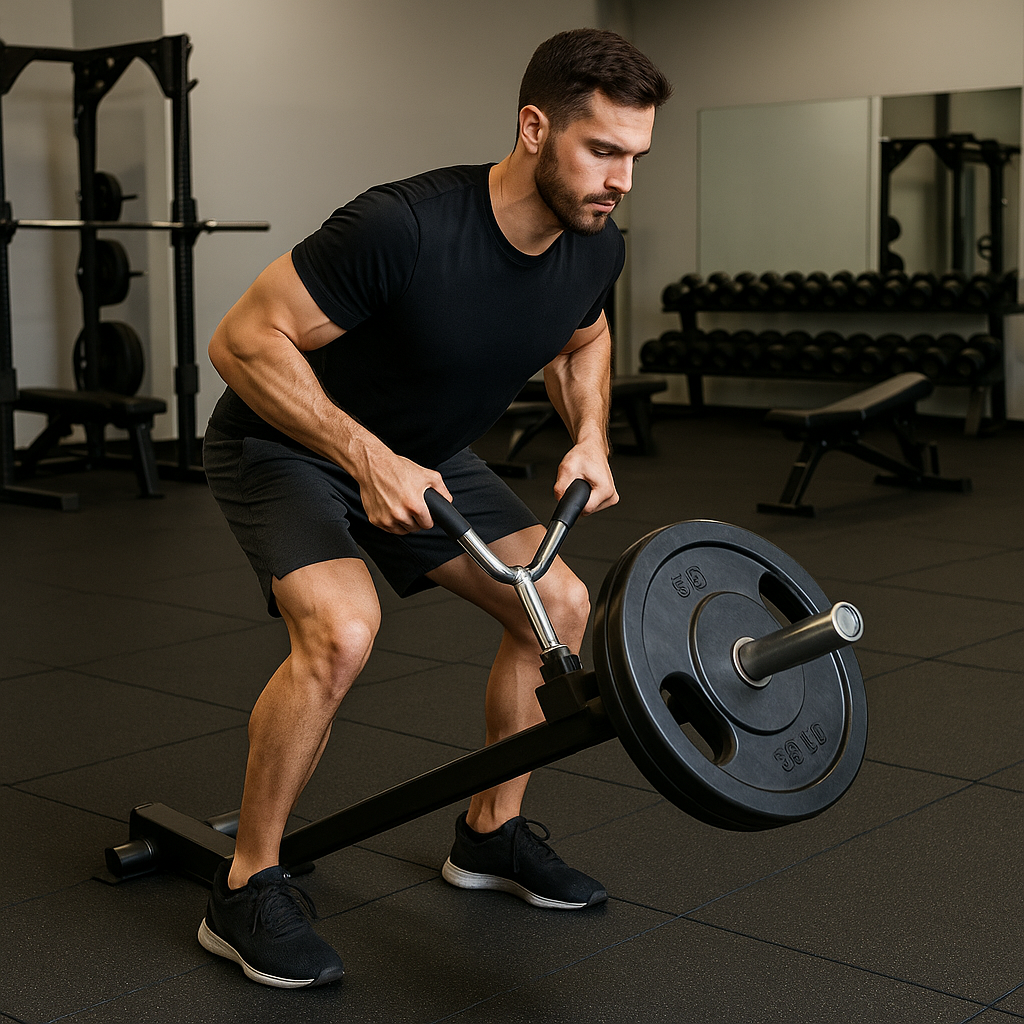
How to perform T-Bar Row
- Load one end of a barbell into a landmine attachment or a corner.
- Add weight plates to the free end and straddle the bar.
- Bend at the hips and grip the handles with a flat back and soft knees.
- Pull the bar toward your chest by squeezing your shoulder blades together.
- Pause at the top, then lower the weight with control.
- Repeat without using momentum, keeping your core engaged.
What is T-Bar Row?
The T-bar row is a loaded horizontal pull performed with a landmine barbell or a dedicated T-bar machine. A close handle typically pulls toward the lower chest or upper abdomen, training the back with a stable path while the hips and trunk support the rowing position.
What muscles does T-Bar Row work?
The lats, rhomboids, middle and lower traps, rear shoulders, biceps, and forearms produce the row. The grip, rotator cuff, spinal erectors, abdominal wall, glutes, hamstrings, and legs stabilize the torso and bar path.
T-Bar Row form cues and common mistakes
- Secure the bar in a rated landmine or use a dedicated machine, load plates with room for the handle, and confirm the attachment cannot slide.
- Hinge at the hips with soft knees, brace the trunk, and keep the spine in a repeatable position before lifting the weight from the floor.
- Pull the handle toward the lower chest or upper abdomen while driving the elbows back instead of jerking the torso upright.
- Pause briefly without shrugging, then lower until the arms are long and the shoulders remain controlled rather than letting the plates crash down.
- Reduce load, use a higher torso angle, or choose a chest-supported machine if lower-back fatigue prevents the upper back from doing controlled work.
How to add T-Bar Row to a workout
Use T-bar rows as a primary back exercise or a heavier accessory after vertical pulls. Start with 3 to 4 sets of 6 to 12 repetitions, leaving 2 to 3 reps in reserve. Add load only when the torso angle and full lowering remain consistent.
Frequently asked questions
What muscles do T-bar rows work?
They train the lats, rhomboids, traps, rear shoulders, biceps, and forearms. The grip, rotator cuff, lower back, core, glutes, hamstrings, and legs stabilize the rowing position.
Where should I pull the T-bar row?
A close handle generally travels toward the lower chest or upper abdomen. Use a path that lets the elbows move back without the shoulders rolling forward or the torso jerking upright.
What is the difference between a T-bar row and barbell row?
A T-bar row pivots from a landmine or machine and often uses a close neutral handle. A barbell row moves a free bar through space, so the grip, balance, and bar path differ.
Use controlled movement and an appropriate variation for your current ability. Stop if an exercise causes sharp pain, and seek qualified guidance when needed.