

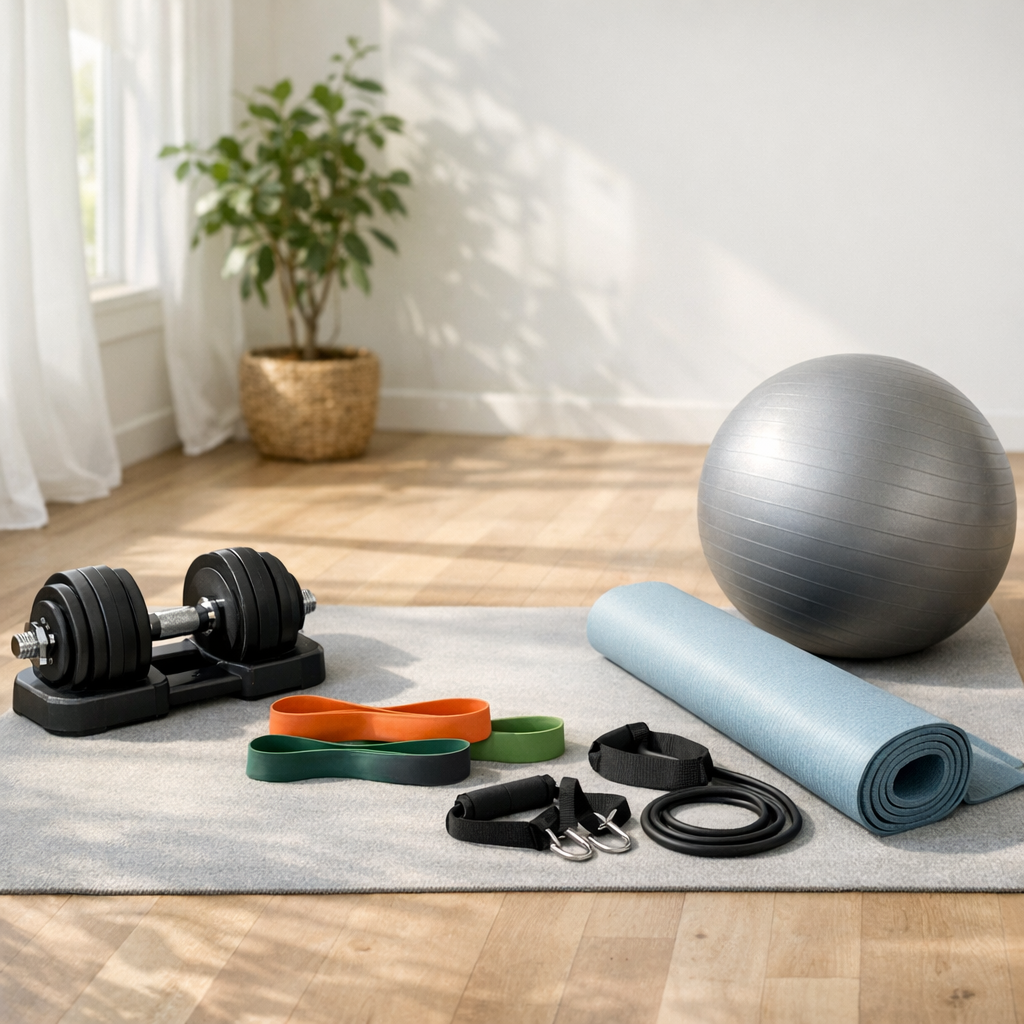
How to Build a Home Gym on Any Budget (2026 Guide)
By PumpPal Updated 7 min read Editorial standards
Build an effective home gym at any budget with equipment priorities, sample setups, small-space tips, safety guidance, and upgrade advice.
Short answer: You can build a useful home gym without buying every machine at once. Start with safe floor space, resistance bands, and a pair of adjustable dumbbells. Add equipment only when your training requires it. A practical setup can cost under $100, while a rack, barbell, plates, and bench can create a full strength-training space for roughly $500 to $1,500 or more.
Start with your goals, space, and budget
Before shopping, decide what the room needs to support. A home gym for general fitness looks different from a powerlifting garage gym or a compact bodyweight setup. Write down your primary goal, the exercises you perform most often, the amount of clear floor space available, and the maximum amount you can comfortably spend.
Measure the usable length, width, and ceiling height. Include room for doors, vehicles, storage, and safe movement around equipment. If you rent or live upstairs, also consider noise, floor protection, and whether wall-mounted equipment is permitted.
Quick planning checklist
• Training goal: strength, muscle gain, conditioning, mobility, or a mixture
• Available space: a workout corner, spare room, basement, or garage
• Exercises: list the movements you actually plan to perform
• Storage: choose where weights, bands, and accessories will go
• Safety: allow clearance around moving parts and loaded equipment
• Budget: reserve part of it for flooring, storage, and future upgrades
Home gym equipment by budget
The most effective purchase is usually the item that supports the greatest number of exercises. The prices below are planning ranges rather than promises; local used-equipment markets and product quality can move the total significantly.
Budget at a glance
Under $100: mat, resistance bands, jump rope, and a sturdy step for bodyweight training and basic conditioning.
$100 to $500: adjustable dumbbells or kettlebells, a bench, bands, and floor protection for full-body strength training.
$500 to $1,500+: rack or squat stand, barbell, plates, bench, storage, and rubber flooring for long-term barbell training.
Starter home gym under $100
For a small budget, prioritize bodyweight training and inexpensive resistance. A set of bands with different resistance levels, a non-slip exercise mat, and a jump rope can cover strength, mobility, and conditioning. A stable step can support step-ups, split squats, and elevated push-ups.
Do not assume homemade load-bearing equipment is safe. Avoid improvised pull-up bars, benches, racks, or weights that could slip, break, or expose sharp edges. Saving money is not worth an unstable setup.
Versatile setup from $100 to $500
Adjustable dumbbells offer a large exercise library in a small footprint. Pair them with a stable adjustable bench and resistance bands, and you can train every major muscle group. A kettlebell is useful for carries, swings, squats, and conditioning, but it is optional if dumbbells already cover your program.
If you train at home because time is limited, this tier often provides the best balance of cost, variety, and storage. You can follow our strength-training guide for beginners or use a bodyweight strength routine while you build the setup gradually.
Complete strength setup from $500 to $1,500+
A rack or squat stand, barbell, weight plates, and a quality bench create a flexible strength-training space. Add protective flooring and storage before spending money on small accessories. If you will train alone, choose equipment with appropriate safety arms, spotter arms, or pins and learn how to set them correctly.
Cardio machines consume more space and can quickly increase the budget. Buy a treadmill, bike, or rower only if you expect to use that specific activity consistently. Walking outdoors, jump rope, loaded carries, or short circuits may already cover your conditioning needs.
Choose equipment for the way you train
Strength and muscle gain
Prioritize load that can increase over time: adjustable dumbbells, a barbell and plates, or a cable-style resistance system. A bench and rack expand your exercise options, but you can make substantial progress with dumbbells and bodyweight movements. Whatever you choose, record weight, repetitions, sets, and effort so you can apply progressive overload without guessing.
Bodyweight and calisthenics
Leave enough open floor area for lunges, push-ups, crawling patterns, and core work. Resistance bands, parallettes, and a properly installed pull-up station can add variety. Check the manufacturer’s installation and weight-limit instructions before placing your body weight on any doorway or wall-mounted product.
Conditioning and CrossFit-style training
Open space, durable flooring, a jump rope, kettlebell, and timer can support many conditioning sessions. A more complete CrossFit-style setup may add bumper plates, a barbell, rack, plyometric box, and medicine ball. Plan for noise and adequate clearance before practicing fast or overhead movements.
Mobility and recovery
A mat, light bands, yoga blocks, and a foam roller require little storage. These tools can complement strength work, but they do not replace progressive resistance if strength or muscle gain is the goal.
How to build a home gym in a small space
• Choose adjustable weights instead of many fixed pairs.
• Use vertical storage for plates, bands, and accessories.
• Consider a foldable bench or rack when the manufacturer supports safe folding and installation.
• Keep frequently used items accessible and store occasional accessories elsewhere.
• Mark a permanent clear area for lunges, push-ups, and warm-ups.
• Avoid filling the room with single-purpose equipment before you know it will be used.
A bedroom corner can be enough for bands, adjustable dumbbells, and a mat. A garage can support heavier equipment, but temperature, moisture, uneven floors, vehicles, and ceiling clearance need additional attention.
What should you buy first?
Use this order as a practical starting point:
• Floor protection and clear space. Create a stable training area before adding equipment.
• One form of adjustable resistance. Bands or adjustable dumbbells work for many people.
• A stable bench or step. Add it only if it supports movements in your program.
• Storage. Keep walkways clear and weights secured.
• Goal-specific equipment. A rack, barbell, cardio machine, or pull-up station should solve a real training need.
Equipment to skip at the beginning
A common mistake is buying a large machine because it looks complete. Multi-station machines can work, but they may have limited adjustment ranges and can dominate a small room. Also be cautious with novelty accessories, very light fixed-weight sets that you will quickly outgrow, and bargain equipment with unclear weight limits.
Start with a short list and train with it for several weeks. Your workout log will show which limitation is actually holding you back. That evidence is more useful than an online “must-have” list.
Home gym safety checklist
• Follow the manufacturer’s assembly, anchoring, inspection, and weight-limit instructions.
• Use safety arms or pins for barbell lifts when appropriate.
• Keep children and pets away from unsecured weights, bands, cables, and moving equipment.
• Store plates and dumbbells so they cannot roll or tip.
• Provide enough lighting, ventilation, and clear walking space.
• Replace damaged bands, cables, benches, fasteners, or flooring.
• Use a qualified installer when mounting equipment or when structural support is uncertain.
If you are new to exercise, returning after an injury, or managing a health condition, seek individualized guidance from an appropriate healthcare or fitness professional.
Turn the equipment into a repeatable plan
A home gym only works when the setup makes training easier. Choose fixed workout times, keep your first plan simple, and avoid changing exercises every session. Record each working set so the next workout has a clear target.
PumpPal can organize custom workouts and track weights, repetitions, personal records, body measurements, and progress photos. PumpPal does not sell equipment or replace professional coaching; it helps you use the equipment you already own more consistently. Current options are $3.99 monthly, $19.99 yearly, or a limited $39.99 lifetime option for the first 1,000 buyers.
Frequently asked questions
How much does it cost to build a home gym?
A basic bodyweight and resistance-band setup can cost under $100. Adjustable weights and a bench commonly move the setup into the $100–$500 range. A rack, barbell, plates, flooring, and storage can cost $500–$1,500 or more depending on capacity and quality.
What is the minimum equipment needed for a home gym?
You need a safe area and a way to make exercises progressively harder. For many people, that can be a mat plus resistance bands or adjustable dumbbells. Equipment is useful, but consistency and progressive training matter more than the number of items.
Is a home gym cheaper than a gym membership?
It can be over time, but the break-even point depends on equipment cost, membership price, maintenance, and how often you train. A home gym also trades the variety and services of a commercial gym for convenience and privacy.
How much space do I need?
A small clear corner can support bands, dumbbells, and bodyweight work. A barbell setup requires substantially more room for the rack, plates, safe loading, and movement around the bar. Measure the equipment and required clearances before buying.
Should I buy home gym equipment used?
Used plates, dumbbells, and some racks can offer good value. Inspect welds, fasteners, cables, upholstery, adjustment mechanisms, rust, recalls, and stated capacity. Avoid equipment with hidden damage or missing safety parts.
The bottom line
Build the smallest home gym that supports your current program, then upgrade from training evidence. Begin with space, safety, and versatile resistance; add heavier or specialized equipment only when it solves a real limitation. Once the setup is ready, use PumpPal to plan workouts and track progress so the investment turns into consistent training.