

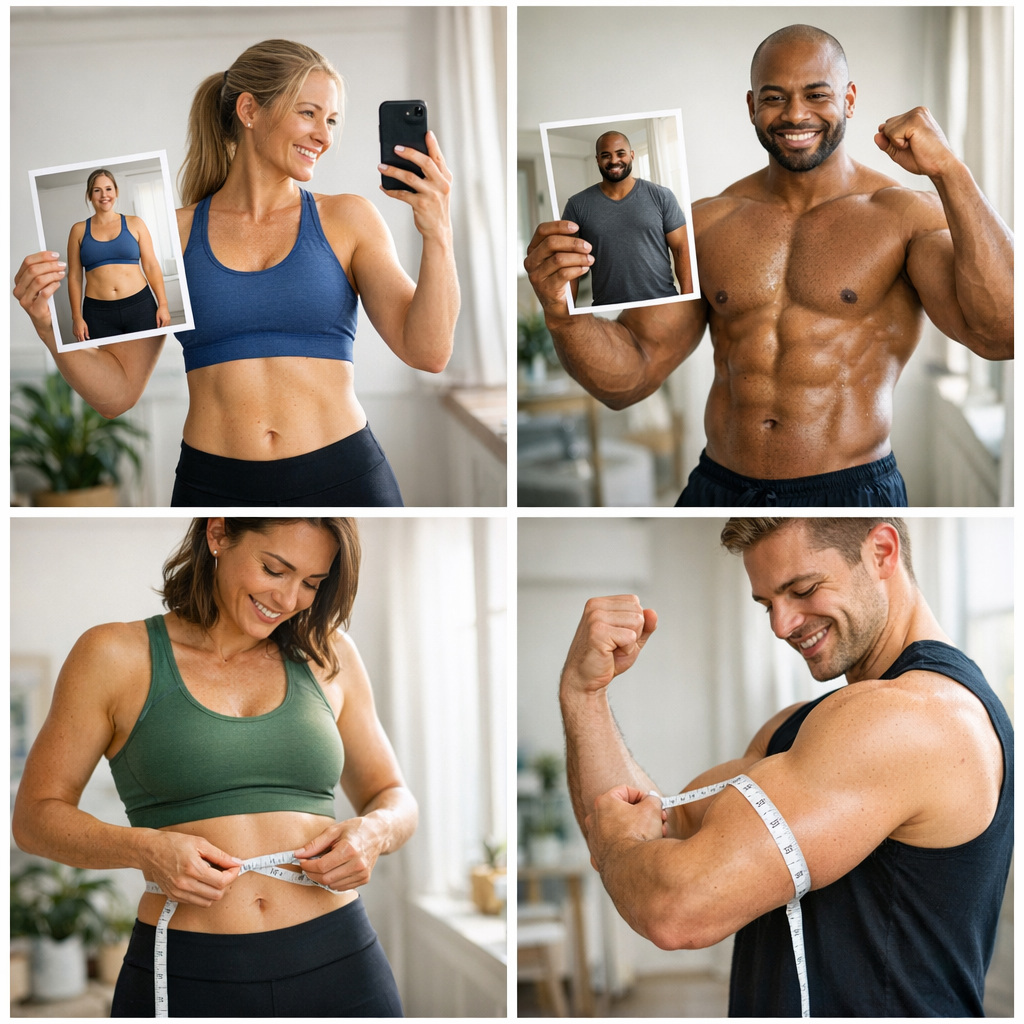
How to Track Non-Scale Fitness Progress
By PumpPal Updated 7 min read Editorial standards
Track progress beyond body weight with strength records, body measurements, consistent photos, endurance tests, and a simple monthly dashboard.
To track fitness progress beyond the scale, use three kinds of evidence: workout performance, consistent body measurements or photos, and a small number of daily-life indicators such as energy, sleep, or how clothes fit. Compare each measure under similar conditions and judge trends over several weeks, not a single day. Record small fitness wins only when they are specific enough to compare later.
Body weight can still be useful. It simply answers one question, while strength, repetitions, waist measurements, photos, and endurance answer different ones.
Non-Scale Fitness Progress at a Glance
| Progress marker | Useful frequency | Keep consistent |
|---|---|---|
| Workout performance | Every session | Exercise, technique, range, load, and rest |
| Body measurements | Every 2–4 weeks | Location, tape tension, time, and posture |
| Progress photos | Every 2–4 weeks | Lighting, distance, angle, clothing, and pose |
| Endurance or work capacity | Every 4–8 weeks | Route, machine, duration, and test conditions |
| Daily-life indicators | Weekly review | Use the same short rating or question |
Why the Scale Can Hide Real Progress
Body weight includes fat, muscle, bone, water, glycogen, and digestive contents. Sodium, carbohydrate intake, hydration, bowel contents, menstrual-cycle changes, and a hard training session can move the number without representing a rapid gain or loss of body fat.
A study of normal day-to-day body-mass variability found that short-term changes are largely explained by water-related factors rather than fast changes in tissue. That is why one weigh-in should not overrule several weeks of training and measurement data.
The scale is not useless. If body-weight change is part of your goal, weigh under consistent conditions and use a multi-day or weekly trend. Pair it with other markers instead of reacting to every reading.
1. Track Strength and Repetition Progress
Workout performance is one of the most direct non-scale measures. Useful signs include:
- lifting more weight for the same repetitions;
- completing more repetitions with the same weight;
- using better range of motion or control;
- performing the same work at a lower effort; and
- progressing to a harder bodyweight variation.
Compare the same exercise under similar conditions. A deeper squat with 100 pounds may represent progress even if last month's shallower squat used 110. Record technique or equipment changes that affect the comparison.
Use the gym PR tracking guide to separate rep, load, volume, and skill records.
2. Measure Body Circumferences Consistently
A soft tape can show changes at the waist, hips, chest, upper arm, or thigh that body weight alone cannot locate. Measurements are useful only when the method is repeatable.
- Choose the exact anatomical location for each measurement.
- Measure at a similar time of day, ideally before training.
- Stand in the same posture and keep muscles relaxed unless the protocol says otherwise.
- Keep the tape level and snug without compressing the skin.
- Take two readings and repeat when they differ substantially.
Measure every two to four weeks rather than several times per day. Small tape-placement differences can be larger than the real change you are trying to detect.
3. Take Comparable Progress Photos
Photos can reveal gradual shape, posture, or muscular-development changes that are difficult to notice in the mirror. They are most useful when the setup stays the same:
- front, side, and back views;
- the same room and camera distance;
- similar lighting and time of day;
- similar clothing; and
- the same relaxed or flexed pose.
Take them every two to four weeks. Daily photos create noise and can encourage overanalysis. Store images privately and use a system whose privacy settings you understand.
4. Track Endurance and Work Capacity
Cardio progress may appear as a faster time on the same route, a longer distance in the same time, a lower perceived effort at the same pace, or a faster recovery between intervals. Strength trainees can also track work capacity through comparable sessions, such as completing the same sets with less rest while preserving performance.
Do not test maximally every week. Use a repeatable submaximal route or machine session, then retest every four to eight weeks. Weather, incline, equipment calibration, and fatigue can all change the result.
5. Record Movement Quality and Skill
A first controlled push-up, unassisted pull-up, deeper pain-free squat, steadier single-leg balance, or better exercise technique is meaningful progress. Define the movement standard before testing it so the goal does not shift after every attempt.
Video can help compare technique when recorded from the same angle. It is not a medical assessment; persistent pain, instability, or loss of function belongs with a qualified health professional.
6. Use Daily-Life Indicators Carefully
Fitness can also improve how physical tasks feel. Examples include climbing stairs with less effort, carrying groceries more comfortably, having more energy for recreation, or recovering faster between active days.
Sleep, mood, stress, and energy are influenced by many factors outside training. Use them as context rather than proof that one workout caused a change. A simple weekly 1–5 rating is often more useful than a long journal you will not maintain.
How to Build a Simple Progress Dashboard
Choose one measure from each category:
- Performance: a main lift, repetition test, or cardio benchmark.
- Body change: body-weight trend, one or two circumferences, or progress photos.
- Consistency: completed workouts per week.
- Daily life: one energy, sleep, or task-performance rating.
Review the dashboard every four weeks. Too many metrics create conflicting signals and make it difficult to decide what matters.
How to Interpret Conflicting Results
Strength is rising but weight is stable
You may be improving skill, coordination, or muscle without a large change in scale weight. Continue if performance and your other goal markers are moving in the intended direction.
Weight is falling but performance is dropping
A calorie deficit, poor sleep, excessive fatigue, illness, or an aggressive program may be affecting training. Review the trend rather than one workout and seek qualified guidance when the decline persists.
Measurements change but photos do not
Confirm the tape location and photo setup. Small measurement changes may not be visually obvious, while different lighting can exaggerate or hide changes.
No marker changes for several weeks
First confirm consistency. If the planned workouts occurred and recovery is adequate, adjust one variable such as repetitions, load, weekly sets, or nutrition. Use the workout-data plateau guide before changing everything.
How PumpPal Tracks Non-Scale Progress
PumpPal keeps several progress types together:
- workout history with exercises, sets, repetitions, and load;
- body measurements over time;
- private progress photos with comparison views; and
- planned routines that show whether the work was completed.
Use the PumpPal workout tracker to compare training performance and the body-measurement guide to set a repeatable measurement process. No account is required for offline workout tracking; optional cloud features should be chosen based on your backup and multi-device needs.
Common Non-Scale Tracking Mistakes
- Changing the test: a different exercise, route, pose, or tape location breaks the comparison.
- Checking too often: daily photos and measurements magnify normal noise.
- Cherry-picking one result: use several aligned trends.
- Comparing with someone else: compare with your own baseline and goal.
- Treating an app as a diagnosis: health biomarkers and symptoms require qualified interpretation.
This article provides general educational information and is not medical advice. Unexplained rapid weight change, persistent fatigue, pain, fainting, or other concerning symptoms should be discussed with a qualified health professional.
Non-Scale Fitness Progress FAQ
What is a non-scale victory?
A non-scale victory is measurable progress not defined by body weight, such as more repetitions, a heavier lift, a smaller waist measurement, better endurance, improved movement skill, or more consistent workouts.
How often should I take progress photos?
Every two to four weeks is practical for most people. Use the same lighting, distance, clothing, angle, and pose so the comparison is useful.
How often should I take body measurements?
Measure every two to four weeks under similar conditions. Use the same anatomical locations and tape tension, and take a second reading to check consistency.
Should I stop weighing myself?
Not necessarily. Body weight can be useful when it matches your goal and does not harm your well-being. Use consistent conditions and focus on a trend rather than one reading.
What is the best sign that a workout plan is working?
Look for a cluster of evidence: improving performance, consistent training, and body or daily-life changes aligned with your goal. No single metric tells the entire story.
Bottom Line
Keep the scale in context. Track workout performance every session, take standardized measurements or photos every few weeks, and review a small dashboard monthly. Consistent methods and multi-week trends reveal more than any isolated number.