

Flexed-Arm Hang exercise
This exercise emphasizes upper body and arm endurance by holding a pull-up position with the chin above the bar.
Updated By PumpPal
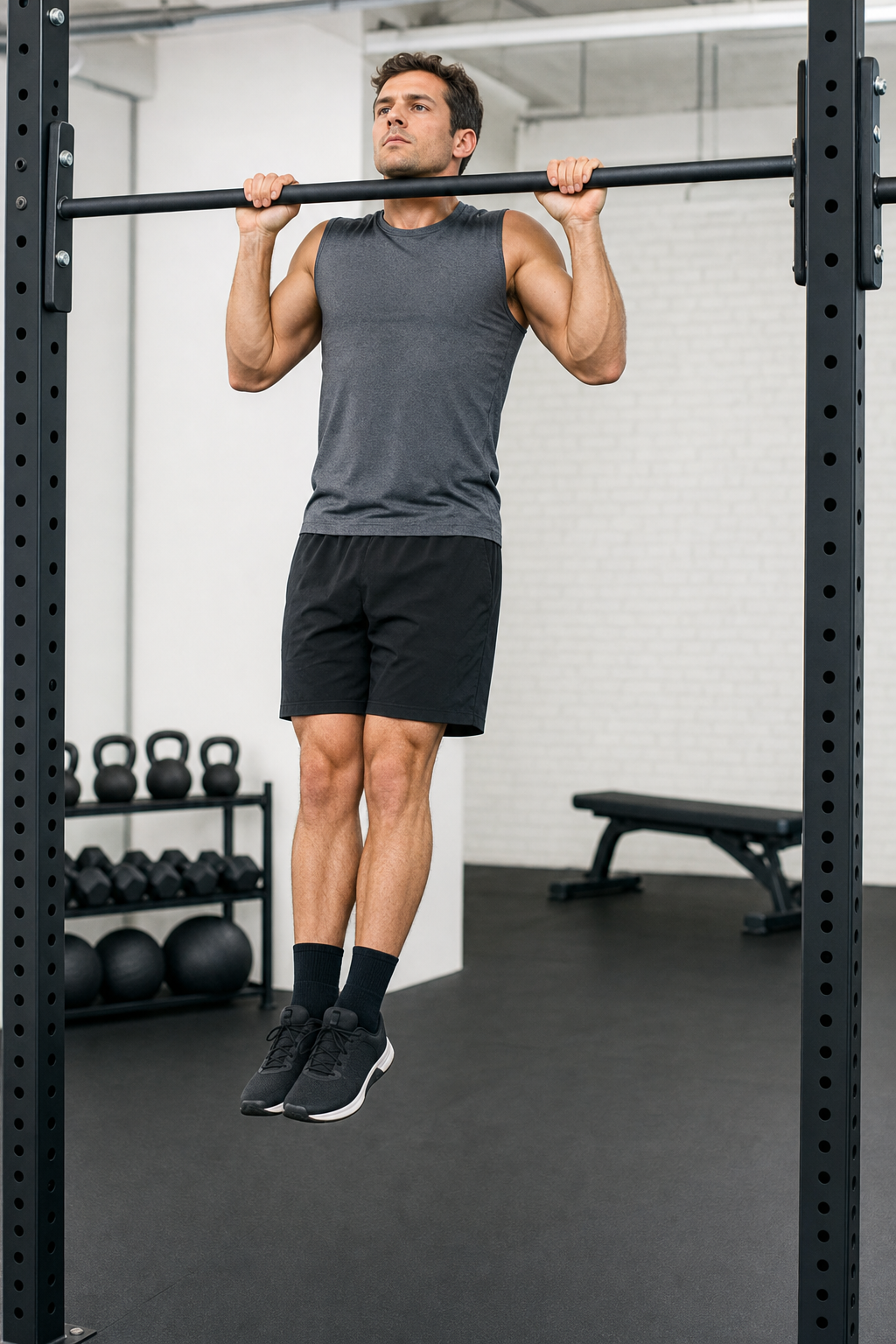
How to perform Flexed-Arm Hang
- Stand under a pull-up bar.
- Jump or use a step to grab the bar with your chin above it.
- Keep elbows bent and chin above the bar.
- Engage back, arms, and core muscles.
- Hold the position, minimizing movement.
- Maintain steady breathing.
- Lower down safely to finish.
What is Flexed-Arm Hang?
The flexed-arm hang is an isometric pulling exercise in which you hold the top of a pull-up or chin-up with the elbows bent and the chin near or above the bar. It develops grip endurance and strength in the hardest upper portion of the pull.
What muscles does Flexed-Arm Hang work?
The biceps, brachialis, lats, rhomboids, and trapezius maintain the top position. The forearms and hands hold the bar while the rotator cuff, abdominal wall, glutes, and legs limit swinging and keep the body organized.
Flexed-Arm Hang form cues and common mistakes
- Use a stable step or box to enter the top position instead of wasting strength on an uncontrolled jump.
- Set the shoulders down and back enough to avoid hanging only from the elbows and hands.
- Keep the chin neutral near the bar; do not reach with the neck to make the hold appear higher.
- Brace the abdomen and keep the legs quiet so swinging does not shorten the useful hold.
- Step down before the grip opens or the shoulders collapse, and stop for sharp elbow or shoulder pain.
How to add Flexed-Arm Hang to a workout
Practice flexed-arm hangs early in a pulling session or after assisted pull-ups. Start with 3 to 5 holds of 5 to 15 seconds, resting fully between efforts. Build consistent time before adding weight or attempting a less favorable grip.
Frequently asked questions
How long should I hold a flexed-arm hang?
Start with repeatable holds of 5 to 15 seconds. Build toward 20 to 30 seconds only while the shoulders remain active, the chin stays neutral, and you can step down safely.
Do flexed-arm hangs help with pull-ups?
They strengthen the top position, grip, and pulling endurance. Pair them with assisted full-range repetitions and controlled negatives so you also train the middle and bottom of the pull-up.
What grip should I use for a flexed-arm hang?
An underhand grip often feels most manageable for beginners, while neutral or overhand grips are also useful. Use a comfortable grip that lets you maintain shoulder and elbow control.
Use controlled movement and an appropriate variation for your current ability. Stop if an exercise causes sharp pain, and seek qualified guidance when needed.