

Single-Arm Ring Row exercise
A unilateral ring exercise targeting upper back and arms by pulling the body up with one arm while stabilizing the core.
Updated By PumpPal
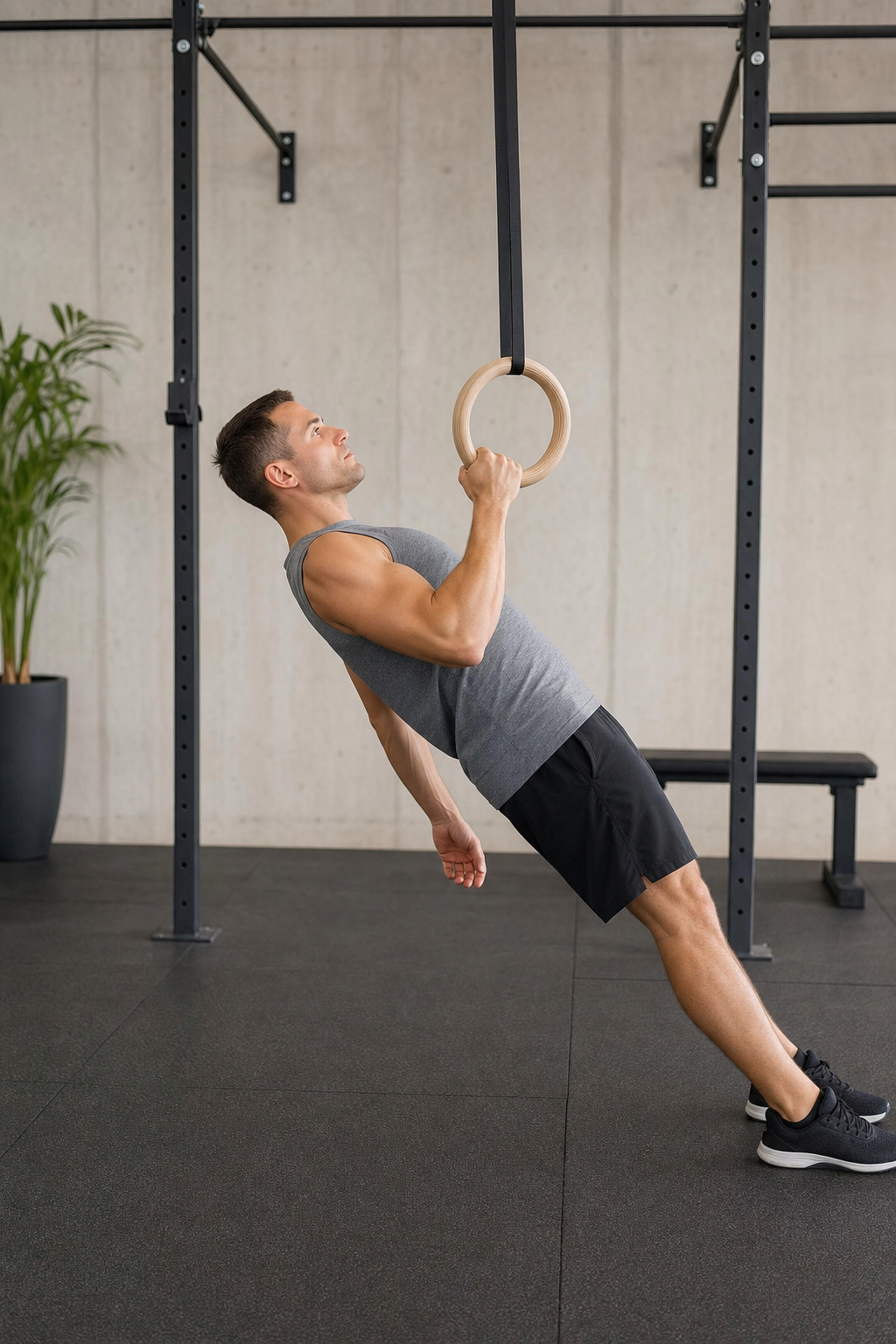
How to perform Single-Arm Ring Row
- Lower one ring to waist level.
- Stand facing the ring and take a firm grip.
- Lean back with arm straight, feet forward.
- Pull your chest up to the ring by bending your elbow.
- Keep your body straight and avoid twisting.
- Slowly extend back to start position.
What is Single-Arm Ring Row?
The single-arm ring row is a unilateral bodyweight pull performed while holding one ring and keeping the torso rigid. Compared with a two-arm ring row, it adds substantial anti-rotation demand because the body must resist twisting toward the working arm.
What muscles does Single-Arm Ring Row work?
The latissimus dorsi, rhomboids, middle trapezius, rear deltoid, and biceps pull the body toward the ring. The forearm, rotator cuff, obliques, abdominal wall, glutes, and legs stabilize the shoulder and prevent the torso from rotating.
Single-Arm Ring Row form cues and common mistakes
- Set the ring and anchor securely, grip it firmly, and begin with a body angle you can control without slipping.
- Brace the abdomen and glutes before pulling so the shoulders, hips, and heels move as one line.
- Pull the ring toward the side of the ribs while keeping the shoulder away from the ear and the chest facing forward.
- Resist twisting toward the working hand; move the feet farther back or use light assistance from the free hand if rotation takes over.
- Lower slowly until the arm is long while maintaining shoulder control instead of dropping suddenly into the bottom position.
How to add Single-Arm Ring Row to a workout
Use single-arm ring rows as a unilateral back exercise after mastering two-arm ring rows. Begin with 3 to 4 sets of 5 to 10 repetitions per side. Make the body more upright or assist with the free hand as needed, then progress by moving the feet farther forward.
Frequently asked questions
What muscles do single-arm ring rows work?
They train the lats, rhomboids, middle trapezius, rear deltoid, and biceps. The forearm, rotator cuff, obliques, abdominal wall, glutes, and legs resist rotation and stabilize the body.
How do I make a single-arm ring row easier?
Stand more upright, bend the knees, or use the free hand for light assistance on the strap or ring. Choose a position that lets you keep the chest facing forward without twisting.
How many single-arm ring rows should I do?
Start with 3 to 4 sets of 5 to 10 controlled repetitions per side. Use the same body angle and range on both sides, and end the set when torso rotation replaces the pull.
Use controlled movement and an appropriate variation for your current ability. Stop if an exercise causes sharp pain, and seek qualified guidance when needed.