

Back Extension exercise
The back extension strengthens the lower back, glutes, and hamstrings while promoting better posture and spinal stability. It’s a controlled bodyweight or weighted movement often performed on a hyperextension bench.
Updated By PumpPal
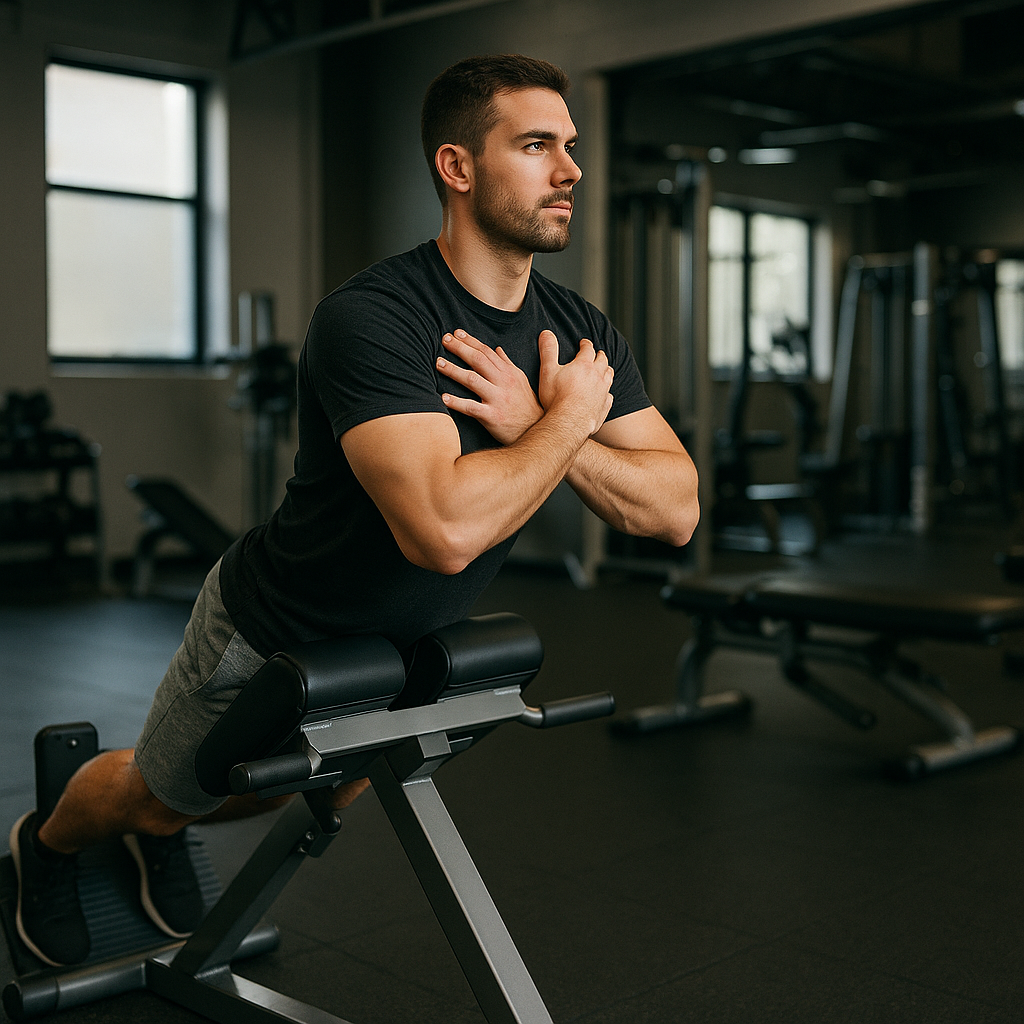
How to perform Back Extension
- Adjust the hyperextension bench so that the top of the pad rests just below your hip bones.
- Position your feet securely under the footpads and cross your arms over your chest or place your hands behind your head.
- Start with your body in a straight line from head to heels, keeping your core tight.
- Slowly lower your upper body toward the floor by bending at the hips, maintaining a neutral spine.
- Go down until you feel a stretch in your hamstrings or your torso is about 90 degrees to the floor.
- Engage your glutes and lower back to raise your torso back up until it aligns with your lower body.
- Avoid hyperextending your back at the top; maintain control throughout the movement.
What is Back Extension?
The back extension is a hip-hinge exercise performed on a 45-degree bench or Roman-chair station. The torso lowers under control and returns until it aligns with the legs, training the posterior chain without needing to bend backward past neutral.
What muscles does Back Extension work?
The glutes, hamstrings, and spinal erectors extend and stabilize the hips and trunk. The upper back, lats, abdominal wall, obliques, adductors, and calves help maintain position against the pad and foot supports.
Back Extension form cues and common mistakes
- Adjust the thigh pad just below the hip crease so the hips can hinge freely, and secure both feet firmly before crossing the arms over the chest.
- Brace the abdomen, keep the spine long, and lower by folding at the hips rather than rounding and straightening the back one segment at a time.
- Drive the hips into the pad and squeeze the glutes to return until the torso lines up with the legs; do not continue into an exaggerated backward arch.
- Move slowly enough to feel the glutes and hamstrings share the work, and keep any plate or dumbbell close to the chest rather than reaching it forward.
- Reduce the range or load if you lose the hip hinge, and stop for sharp back, hip, hamstring, knee, or neck pain.
How to add Back Extension to a workout
Begin with bodyweight back extensions for 2 to 4 sets of 8 to 15 controlled repetitions, leaving 2 to 3 reps in reserve. Add repetitions and pause control before holding a small weight close to the chest.
Frequently asked questions
Do back extensions work the lower back or glutes?
They train both. The spinal erectors stabilize the trunk while the glutes and hamstrings extend the hips. A controlled hip hinge and glute squeeze usually distribute the work better than repeatedly arching the lower back.
How high should I come up on a back extension?
Finish when the torso is roughly in line with the legs. Going higher by leaning backward adds spinal extension without improving the hip-hinge portion of the exercise.
How do I add weight to back extensions safely?
First master full bodyweight sets, then hold a light plate or dumbbell close to the chest. Increase the load gradually while the foot support, hip hinge, neutral finish, and controlled tempo remain unchanged.
Use controlled movement and an appropriate variation for your current ability. Stop if an exercise causes sharp pain, and seek qualified guidance when needed.