

Hip Hinge (Good Mornings) exercise
The hip hinge, often performed as a good morning, strengthens the posterior chain — including the hamstrings, glutes, and lower back — while teaching proper hinge mechanics. It’s an excellent movement for improving posture, stability, and foundational lifting technique.
Updated By PumpPal
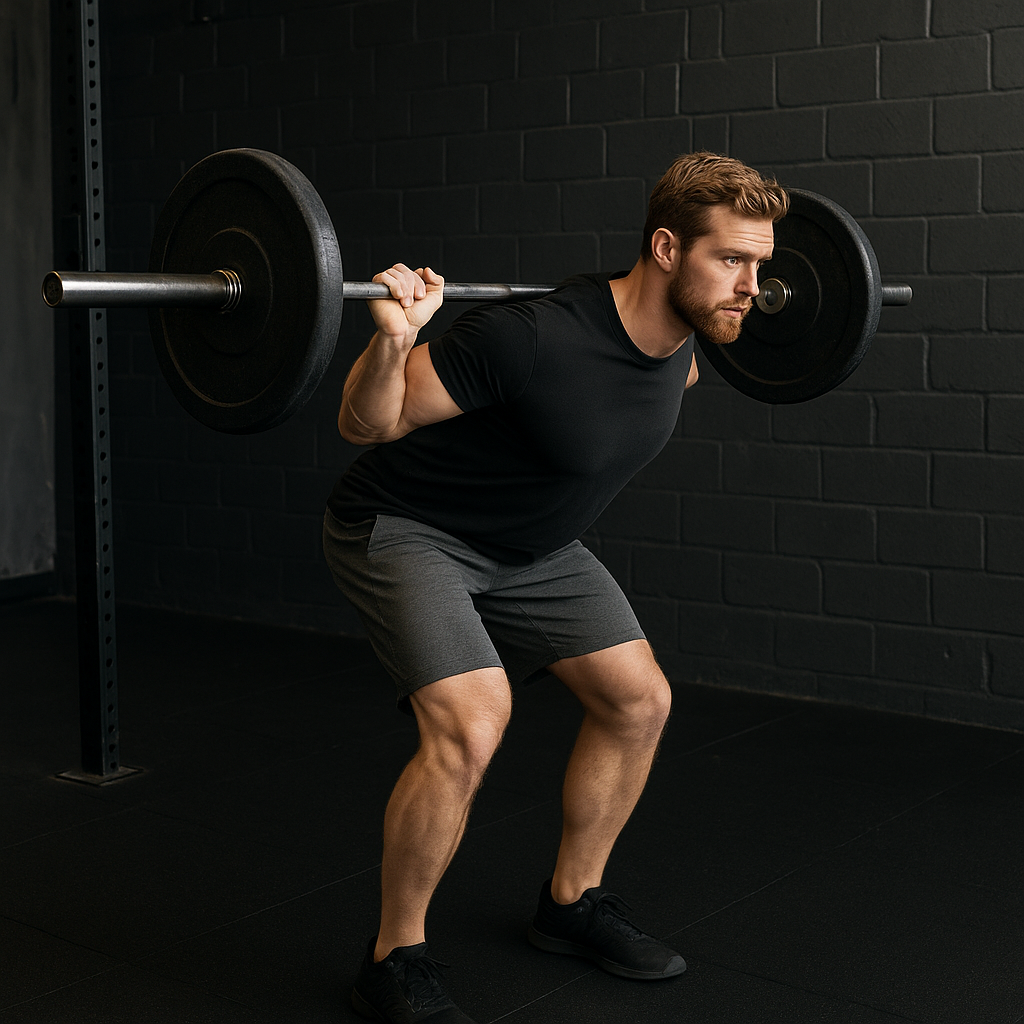
How to perform Hip Hinge (Good Mornings)
- Stand with your feet shoulder-width apart and place a barbell lightly across your upper back, not on your neck.
- Engage your core and slightly bend your knees.
- Keeping your back flat, hinge forward at the hips by pushing them backward while maintaining a neutral spine.
- Lower your torso until it’s nearly parallel to the ground or until you feel a stretch in your hamstrings.
- Drive your hips forward and contract your glutes to return to the starting position.
- Avoid rounding your back or bending excessively at the knees.
- Repeat for the desired number of repetitions with controlled movement and breathing.
What is Hip Hinge (Good Mornings)?
The hip hinge moves the hips backward while the trunk tips forward and the spine stays controlled. A good morning applies that pattern with bodyweight, a band, or a bar across the upper back, making it both a hinge-teaching drill and a posterior-chain strength exercise.
What muscles does Hip Hinge (Good Mornings) work?
The glutes, hamstrings, adductors, and spinal erectors control the hinge and return the hips to standing. The abdominal wall, obliques, upper back, lats, feet, and calves stabilize the trunk, bar position, and balance.
Hip Hinge (Good Mornings) form cues and common mistakes
- Learn the pattern without load first by pushing the hips backward toward a wall while keeping the feet planted and knees softly bent.
- Brace the abdomen, keep the bar on the upper back rather than the neck when loaded, and maintain a comfortable neutral head and spine position.
- Send the hips back as the torso inclines, keeping the shins relatively quiet instead of turning the movement into a squat.
- Stop when the hamstrings limit further motion or the spine would change position, then drive the floor away and bring the hips forward to stand.
- Use a shorter range, dowel, or light band before a barbell, and stop for sharp back, hip, hamstring, knee, or neck pain.
How to add Hip Hinge (Good Mornings) to a workout
Use unloaded hip hinges in warm-ups or technique practice and loaded good mornings as an accessory. Start with 2 to 4 sets of 8 to 15 controlled repetitions, leaving 3 reps in reserve. Increase range and consistency before adding barbell load.
Frequently asked questions
What muscles do good mornings work?
They train the glutes, hamstrings, adductors, and spinal erectors while the core, upper back, lats, feet, and calves stabilize the trunk and any external load.
What is the difference between a hip hinge and a good morning?
The hip hinge is the movement pattern of sending the hips back as the torso inclines. A good morning is one exercise that loads or practices that pattern, often with a bar, band, or bodyweight.
How low should I go in a good morning?
Stop when you reach your controlled hamstring range or before the spine changes position. The torso does not need to become parallel with the floor for the exercise to be effective.
Use controlled movement and an appropriate variation for your current ability. Stop if an exercise causes sharp pain, and seek qualified guidance when needed.