

Bear Crawl exercise
A dynamic, full-body bodyweight movement that builds core strength, shoulder stability, and coordination while improving cardiovascular fitness.
Updated By PumpPal
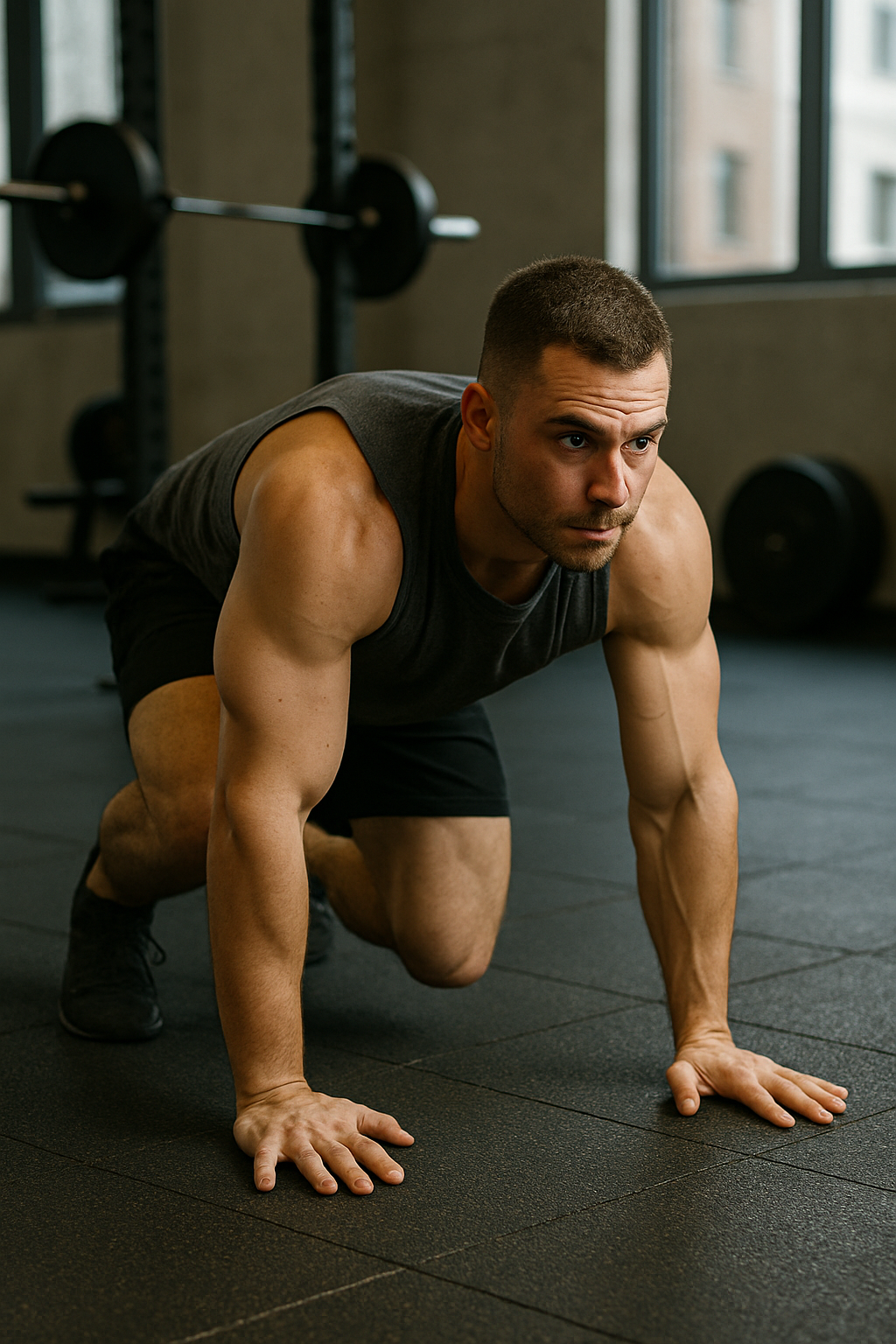
How to perform Bear Crawl
- Start on all fours with your hands directly under your shoulders and knees under your hips.
- Lift your knees slightly off the ground, keeping your back flat and core engaged.
- Move your right hand and left foot forward simultaneously, then your left hand and right foot.
- Continue crawling forward in a controlled, low-to-the-ground motion.
- Keep your hips low and back flat throughout the movement.
- Repeat for the desired distance or time.
What is Bear Crawl?
The bear crawl is a quadrupedal movement performed with the hands and feet on the floor and the knees hovering just above it. Moving opposite hand and foot together trains whole-body coordination while the shoulders and trunk stabilize the low crawling position.
What muscles does Bear Crawl work?
The shoulders, chest, triceps, serratus anterior, abdominal wall, obliques, hip flexors, quadriceps, glutes, and calves share the work. The wrists, hands, upper back, spinal stabilizers, and inner and outer hips control the crawling pattern.
Bear Crawl form cues and common mistakes
- Start on all fours with the hands below the shoulders and knees below the hips, then lift the knees only a few inches while keeping the back level.
- Brace the trunk and move the right hand with the left foot, followed by the left hand with the right foot, using short quiet steps.
- Keep the hips low and relatively square instead of rocking side to side, lifting the rear high, or letting the lower back sag.
- Place each hand deliberately with the fingers spread and slow down before the steps become crossed, rushed, or heavy.
- Use a stationary bear hold or shorter crawl to regress, and stop for sharp wrist, shoulder, back, hip, or knee pain.
How to add Bear Crawl to a workout
Use bear crawls in a warm-up, conditioning circuit, or core session. Begin with 3 to 5 rounds of 10 to 20 seconds or 5 to 10 controlled steps each direction. Add distance gradually before increasing speed or external load.
Frequently asked questions
What muscles do bear crawls work?
Bear crawls train the shoulders, chest, triceps, serratus, core, hip flexors, quadriceps, glutes, and calves while the wrists, upper back, and hip stabilizers support the position.
How high should the knees be during a bear crawl?
Keep the knees only a few inches above the floor. A low hover makes it easier to keep the back level and hips controlled instead of turning the movement into a high crawl.
How can I make bear crawls easier?
Practice a stationary bear hold, take fewer and shorter steps, crawl more slowly, or rest the knees between repetitions. Build control before adding longer distances.
Use controlled movement and an appropriate variation for your current ability. Stop if an exercise causes sharp pain, and seek qualified guidance when needed.