

Crab Reach exercise
A dynamic reverse crawl with a reach, targeting shoulders, glutes, and thoracic mobility.
Updated By PumpPal
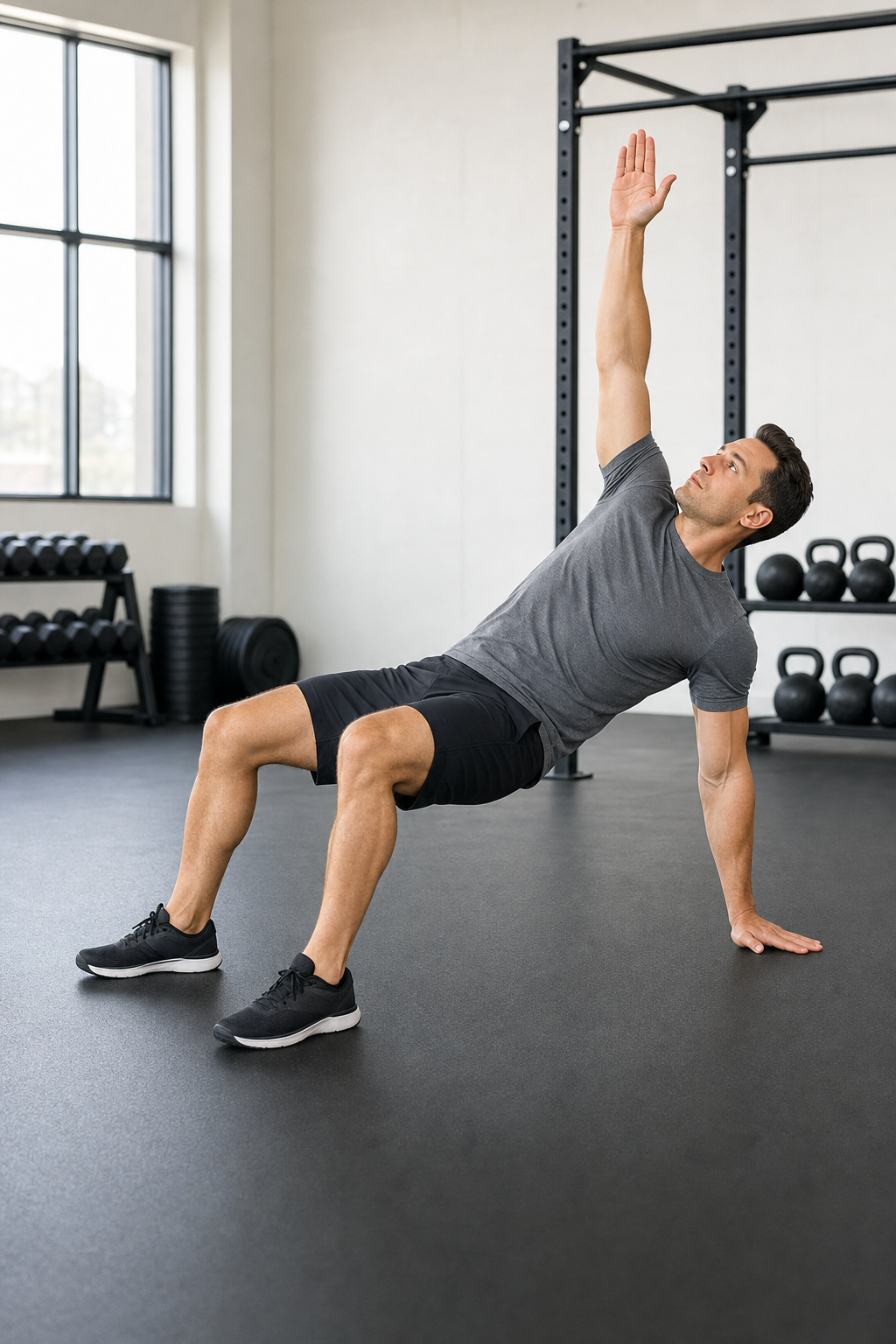
How to perform Crab Reach
- Start in a crab position, hips raised off the floor.
- Lift one arm and reach up and across your body.
- Rotate torso as you reach overhead.
- Return hand to the floor and repeat with the other side.
- Alternate for desired reps.
What is Crab Reach?
The crab reach is a stationary reverse-tabletop exercise that combines hip extension with an overhead cross-body reach. One hand stays planted while the opposite arm sweeps over the shoulder and the torso rotates, distinguishing it from a crab walk that travels across the floor.
What muscles does Crab Reach work?
The glutes and hamstrings hold the hips up while the planted triceps, shoulder, upper back, and serratus anterior support the torso. The abdominals, obliques, spinal rotators, chest, hip flexors, and reaching shoulder control the rotation and overhead range.
Crab Reach form cues and common mistakes
- Sit with the feet flat and hands behind you, then test a comfortable hand angle before lifting the hips.
- Press through both feet and the planted hand to create a stable reverse-tabletop base.
- Reach the free arm up and across while rotating through the upper back instead of forcing the planted shoulder or lower back.
- Keep the hips supported and use a smaller arc if the chest, shoulder, or wrist limits the overhead reach.
- Return the hand and hips with control, alternate sides evenly, and stop for sharp wrist, shoulder, or back pain.
How to add Crab Reach to a workout
Use crab reaches in a dynamic warm-up, mobility circuit, or bodyweight conditioning session. Begin with 2 to 4 sets of 4 to 8 controlled repetitions per side. Progress by holding the top briefly or increasing the comfortable reach rather than rushing the rotation.
Frequently asked questions
What muscles does the crab reach work?
It trains the glutes, hamstrings, triceps, shoulders, upper back, serratus anterior, abdominals, and obliques while moving the chest and upper back through rotation.
What is the difference between a crab reach and crab walk?
A crab reach stays mostly in place and adds a rotational overhead reach. A crab walk alternates the hands and feet to travel forward, backward, or sideways.
How can I make crab reaches easier?
Keep the hips lower, use a smaller reach, or practice the reverse-tabletop hold without rotation. Adjust the planted hand angle and stop before wrist or shoulder discomfort.
Use controlled movement and an appropriate variation for your current ability. Stop if an exercise causes sharp pain, and seek qualified guidance when needed.