

Dead Hang exercise
A grip strength and endurance exercise performed by hanging from a pull-up bar with both hands.
Updated By PumpPal
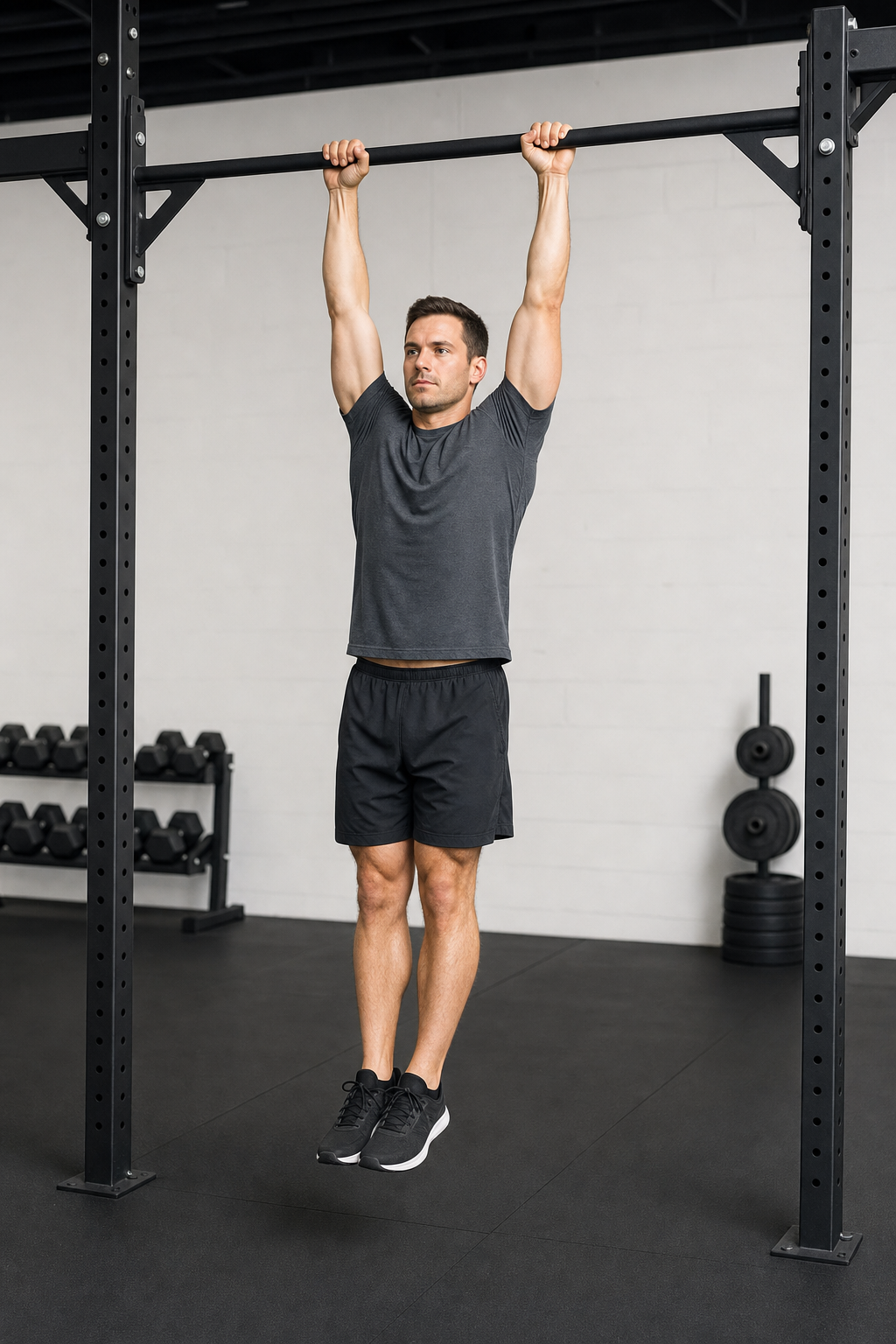
How to perform Dead Hang
- Stand beneath a pull-up bar.
- Reach up and grasp the bar with both hands, palms facing away or toward you.
- Engage your shoulders and core.
- Lift your feet off the ground to hang freely.
- Keep your arms fully extended and body still.
- Hang for the desired duration.
- Lower feet to the ground to finish.
What is Dead Hang?
The dead hang is a timed hold from an overhead bar with both hands and the feet clear of the floor. It builds grip endurance and overhead-position tolerance while the shoulders and torso control the hanging body.
What muscles does Dead Hang work?
The hands and forearms maintain the grip. The lats, lower traps, rotator cuff, upper back, biceps, abdominal wall, glutes, and spinal stabilizers manage the shoulder position and limit unwanted swinging.
Dead Hang form cues and common mistakes
- Inspect the pull-up bar and its mounting, use a full grip, and begin from a box or step so you can test the setup before taking full bodyweight.
- Start with the shoulders gently active rather than dropping suddenly into the bottom position, especially if overhead range is new or limited.
- Keep the ribs and pelvis controlled, let the legs hang quietly, and avoid kicking, twisting, or holding your breath.
- Use light toe support, shorter holds, or an assisted grip if the hands open early or the shoulders cannot stay comfortable.
- Step down before the grip fails and stop for sharp hand, elbow, shoulder, neck, or back pain, numbness, or tingling.
How to add Dead Hang to a workout
Use dead hangs near the end of an upper-body session or as focused grip work. Start with 3 to 5 holds of 10 to 30 seconds and rest long enough to repeat the same position. Add time before progressing to towels, thicker grips, or one-arm variations.
Frequently asked questions
What muscles does a dead hang work?
It primarily challenges the hands and forearms. The lats, traps, rotator cuff, upper back, arms, core, glutes, and spinal stabilizers help control the shoulders and body.
Should a dead hang be active or passive?
An active hang keeps gentle shoulder-blade control and is a practical starting point. A passive hang allows more elevation, but use only a comfortable range and avoid forcing the shoulders.
How long should I hold a dead hang?
Begin with repeatable 10- to 30-second holds. Build toward 30 to 60 seconds only if the grip stays secure and the shoulders remain comfortable without swinging.
Use controlled movement and an appropriate variation for your current ability. Stop if an exercise causes sharp pain, and seek qualified guidance when needed.