

One-Arm Dead Hang exercise
A strength exercise focused on grip, arm, and shoulder stamina, hanging from a bar with one arm.
Updated By PumpPal
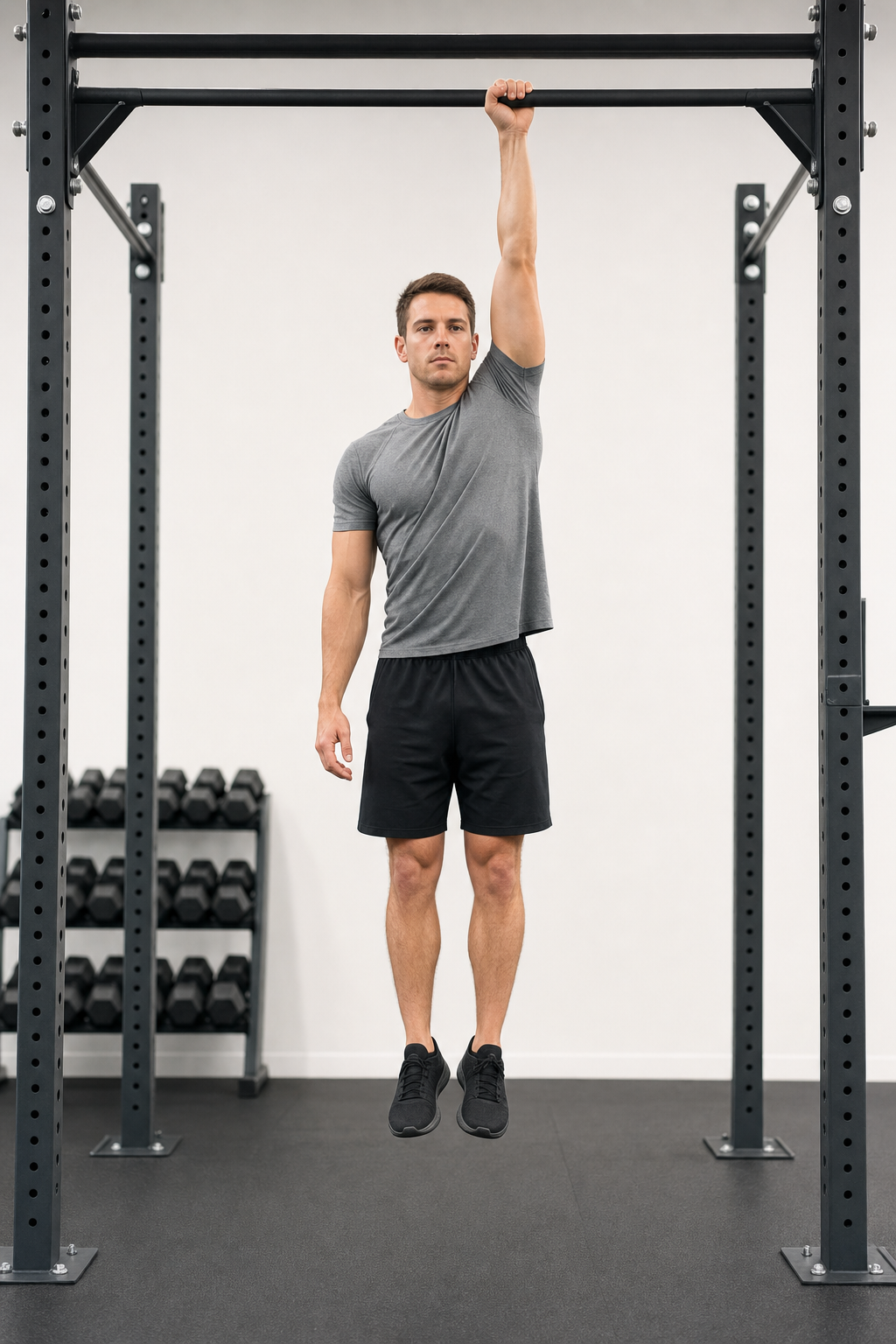
How to perform One-Arm Dead Hang
- Stand beneath a pull-up bar.
- Reach up and grasp the bar with one hand.
- Engage your shoulder and core.
- Lift your feet off the ground, hanging freely.
- Keep your body stable and avoid swinging.
- Hang for the target time.
- Lower your feet and switch arms if desired.
What is One-Arm Dead Hang?
The one-arm dead hang is an advanced unilateral hang from a pull-up bar. It challenges grip endurance and shoulder control while the trunk resists rotation; most athletes should progress from two-arm hangs and assisted one-arm holds rather than dropping immediately into full bodyweight on one side.
What muscles does One-Arm Dead Hang work?
The fingers, hand, forearm flexors, upper back, lats, rotator cuff, and shoulder stabilizers support the hang. The obliques, abdominal wall, spinal stabilizers, glutes, and legs limit swinging and rotation beneath the working arm.
One-Arm Dead Hang form cues and common mistakes
- Use a secure bar, warm the hands and shoulders, and build comfortable two-arm dead hangs before shifting most of your weight to one hand.
- Grip with the whole hand and keep enough active shoulder tension that the upper arm does not feel as if it is being pulled abruptly away from the torso.
- Brace the trunk and keep the legs quiet; a small natural rotation is acceptable, but do not use twisting or swinging to extend the hold.
- Use the other hand on the bar, a strap, or a nearby support to unload the working side and release the hold before the grip opens unexpectedly.
- Step down under control and stop for sharp finger, wrist, elbow, shoulder, neck, or upper-back pain, numbness, or tingling.
How to add One-Arm Dead Hang to a workout
Add one-arm dead hangs after primary pulling work or in a short grip session. Begin with 3 to 5 assisted holds of 5 to 15 seconds per side. Progress toward controlled 10- to 30-second holds before adding load, and keep both sides within a similar quality range.
Frequently asked questions
What muscles do one-arm dead hangs work?
They strongly challenge the hand and forearm grip while the lats, upper back, rotator cuff, and shoulder stabilizers support the arm. The obliques and rest of the core resist rotation.
How do I progress to a one-arm dead hang?
Build two-arm hang time, then shift more weight to one side while the other hand keeps light contact with the bar, a strap, or a support. Reduce that assistance gradually.
Should a one-arm dead hang be active or passive?
Use enough active shoulder control to avoid an abrupt unsupported pull. Some trained athletes tolerate a more relaxed hang, but the range should remain comfortable and controlled rather than forced.
Use controlled movement and an appropriate variation for your current ability. Stop if an exercise causes sharp pain, and seek qualified guidance when needed.