

Ring Hang exercise
A basic hang from gymnastic rings to develop grip, shoulder stability, and core strength.
Updated By PumpPal
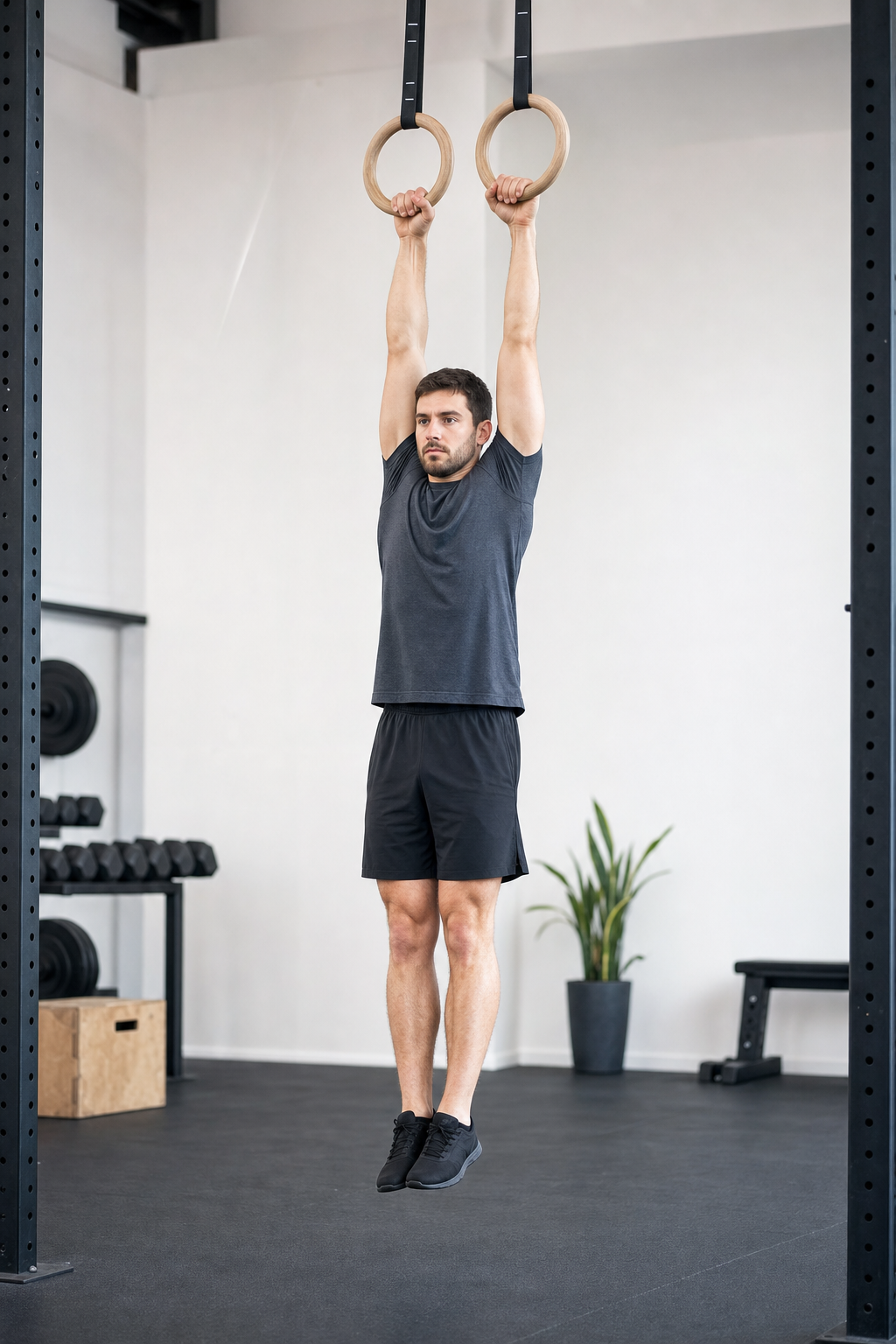
How to perform Ring Hang
- Stand beneath a set of rings.
- Grab both rings with an overhand grip.
- Lift your feet off the floor, letting your body hang.
- Engage shoulders and core to maintain stability.
- Keep arms fully extended.
- Hold for the desired time.
What is Ring Hang?
The ring hang is a two-arm bodyweight hold from gymnastic rings. Because each ring moves independently, the hands, shoulders, and trunk must control more motion than during a fixed-bar hang, making secure setup and gradual loading essential.
What muscles does Ring Hang work?
The forearms and hands maintain the grip while the lats, lower traps, rotator cuff, upper back, biceps, triceps, abdominal wall, and spinal stabilizers control the shoulders, rings, and body position.
Ring Hang form cues and common mistakes
- Inspect both rings, straps, buckles, and the overhead anchor, set the rings to equal height, and test the setup with the feet supported.
- Use a full, comfortable grip with the thumbs around the rings and begin with enough foot assistance to prevent an uncontrolled drop.
- For an active hang, gently draw the shoulders down away from the ears; for a passive hang, relax only within a pain-free range you can control.
- Keep the rings quiet, the ribs controlled, and the body still instead of swinging, twisting, or jumping into the hold.
- Step down before the grip opens and stop for sharp hand, elbow, or shoulder pain, numbness, or tingling.
How to add Ring Hang to a workout
Use ring hangs to build grip endurance and overhead comfort. Start with 3 to 5 holds of 10 to 30 seconds using foot assistance as needed. Add 5 seconds at a time until you can complete every hold without swinging or losing the shoulder position.
Frequently asked questions
What muscles do ring hangs work?
They primarily challenge the hands and forearms while the lats, upper back, rotator cuff, arms, core, and spinal stabilizers control the shoulders, rings, and body.
Is a ring hang harder than a bar hang?
It often feels harder because each ring can move and rotate independently. The grip and shoulder stabilizers must control that extra motion even when the same bodyweight is used.
Should I use an active or passive ring hang?
An active hang keeps the shoulders gently depressed and is useful for building control. A passive hang allows more shoulder elevation, but use only a comfortable range and avoid it if it causes pain or instability.
Use controlled movement and an appropriate variation for your current ability. Stop if an exercise causes sharp pain, and seek qualified guidance when needed.