

Frog Stand exercise
The frog stand is a foundational balancing pose in gymnastics and calisthenics that builds wrist strength, core stability, and shoulder control. It involves balancing the knees on the backs of the upper arms in a crouched position with hands planted on the ground. This isometric exercise enhances body awareness, balance, and strength, making it a great precursor to handstands and other advanced holds.
Updated By PumpPal
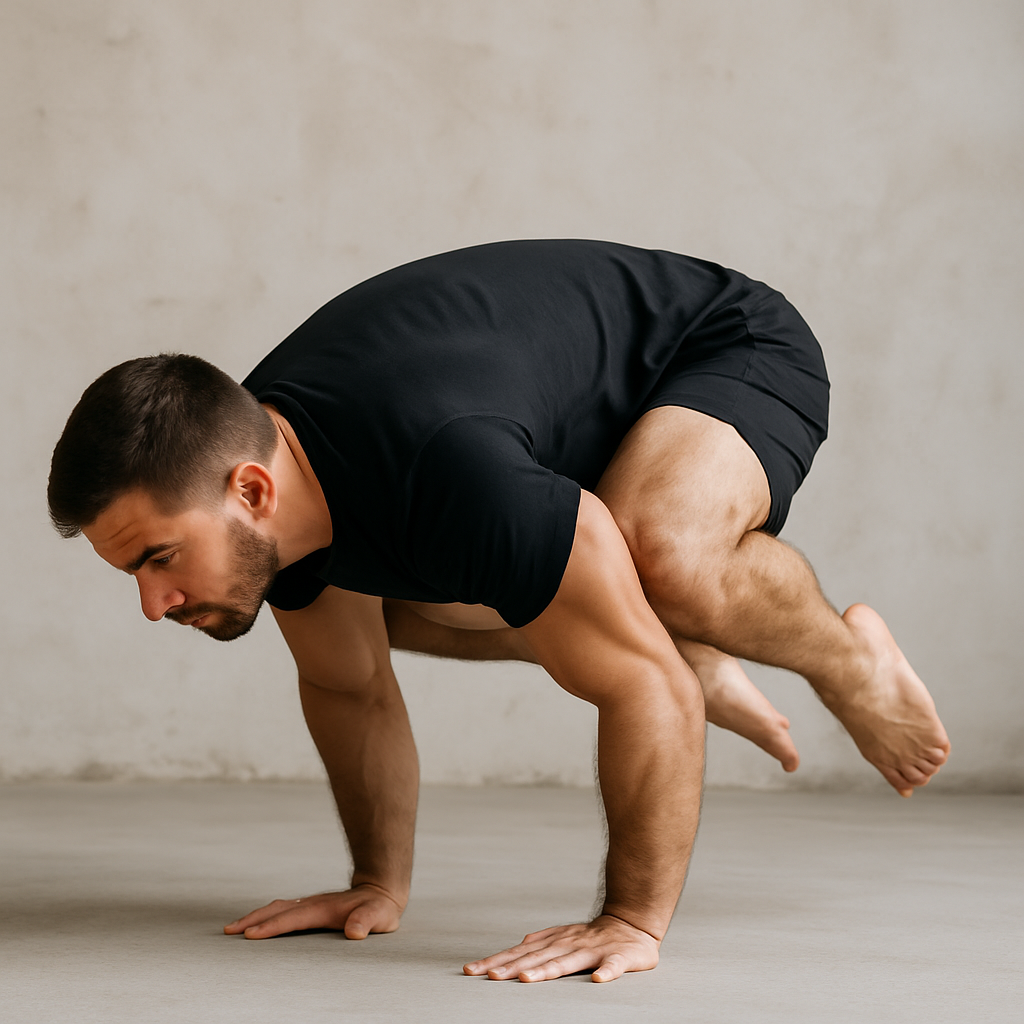
How to perform Frog Stand
- Start by squatting down with your feet slightly apart and hands placed flat on the floor, shoulder-width apart.
- Bend your elbows slightly and position your knees on the backs of your upper arms, near your triceps.
- Shift your weight forward slowly, lifting one foot off the ground, then the other.
- Engage your core and find your balance, keeping your gaze slightly forward and not down.
- Hold the position as long as possible while keeping your arms bent and stable.
- When done, lower your feet back to the floor with control.
- Practice regularly to improve balance, wrist strength, and core stability.
What is Frog Stand?
The frog stand is a beginner arm balance performed with bent elbows and the knees supported on the backs or outsides of the upper arms. Shifting the body forward lets the feet lift while the arm contact provides more support than a straight-arm tuck planche.
What muscles does Frog Stand work?
The shoulders, triceps, chest, forearms, wrists, and hands support the body. The abdominal wall, obliques, hip flexors, adductors, upper back, and spinal stabilizers control the tucked position and balance.
Frog Stand form cues and common mistakes
- Warm the wrists, use a clear nonslip surface, and place a cushion in front while learning the forward weight shift.
- Spread the fingers, press through the whole hand, bend the elbows, and place the knees securely against the upper arms.
- Look slightly forward and shift gradually until one foot, then both feet, can float without jumping.
- Keep the shoulders active and the knees supported instead of forcing straight arms or trying to hold through wrist pain.
- Exit by placing one foot down at a time, and shorten the hold before balance or hand pressure becomes uncontrolled.
How to add Frog Stand to a workout
Practice frog stands early in a calisthenics or balance session. Start with 4 to 8 attempts of 5 to 15 seconds, resting enough to keep each entry controlled. Progress toward 20- to 30-second holds before harder planche or handstand drills.
Frequently asked questions
What muscles does the frog stand work?
It trains the shoulders, triceps, chest, forearms, wrists, hands, core, hip flexors, inner thighs, upper back, and spinal stabilizers while developing balance.
Is a frog stand easier than a tuck planche?
Usually yes. In a frog stand the bent knees rest on the upper arms, providing support. A tuck planche normally uses straight arms and keeps the knees free of the arms.
How long should a beginner hold a frog stand?
Start with controlled 5- to 15-second attempts. Build toward repeatable 20- to 30-second holds before progressing, and always leave enough control for a safe exit.
Use controlled movement and an appropriate variation for your current ability. Stop if an exercise causes sharp pain, and seek qualified guidance when needed.