

Wall Handstand Hold exercise
A static hold in handstand position with feet supported on a wall, developing balance and endurance.
Updated By PumpPal
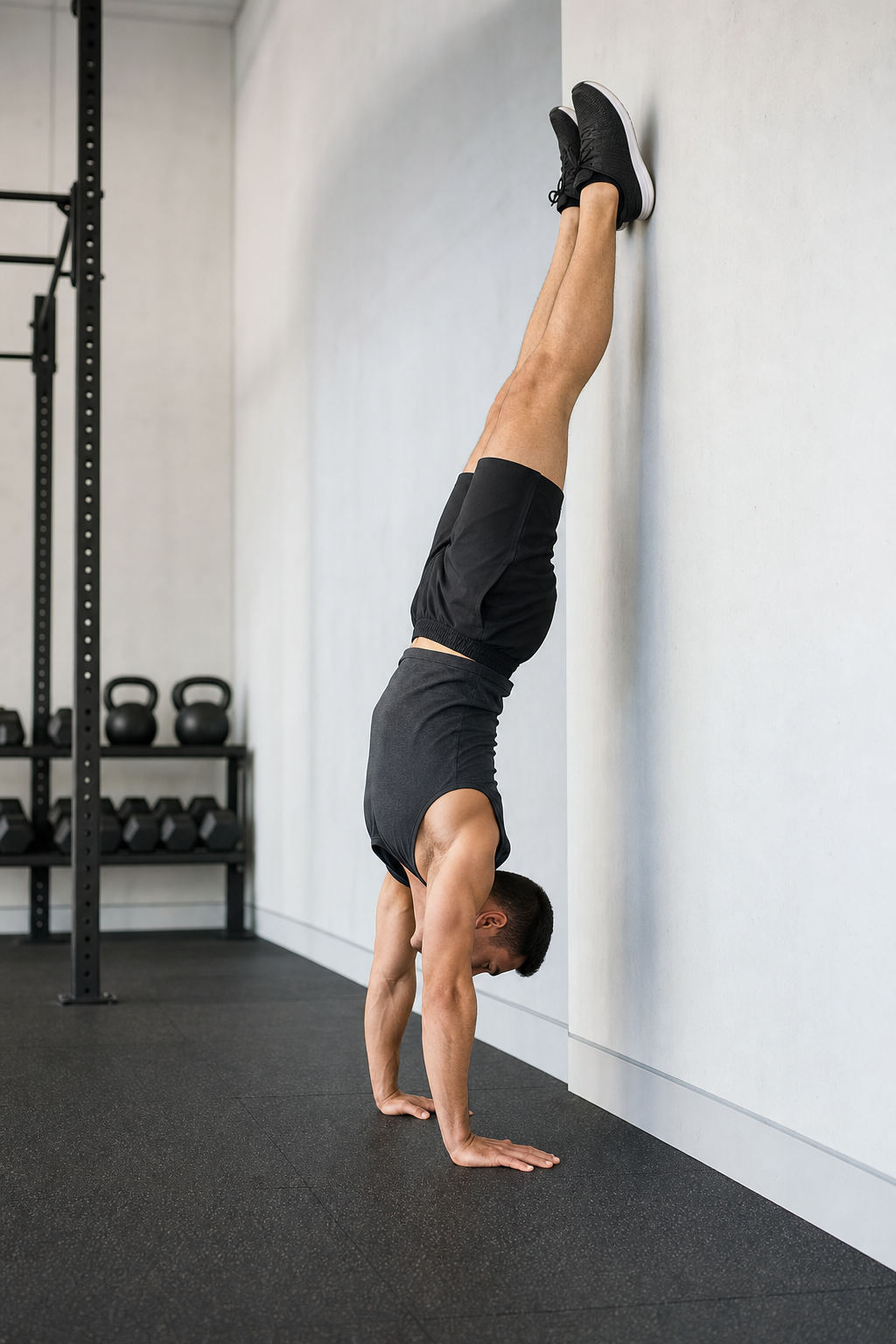
How to perform Wall Handstand Hold
- Face the wall and kick up into a handstand with feet on the wall.
- Keep your body straight and core tight.
- Maintain position as long as possible.
- Breathe steadily throughout the hold.
- Come down safely when done.
What is Wall Handstand Hold?
A wall handstand hold is an assisted inversion that uses the wall for balance while you support your bodyweight through the hands. It develops comfort upside down and the stacked shoulder and core control needed for handstand progressions.
What muscles does Wall Handstand Hold work?
Wall handstand holds mainly train the shoulders, triceps, upper back, and core. The forearms, hands, glutes, and legs also stay active to maintain a straight, controlled body line.
Wall Handstand Hold form cues and common mistakes
- Place the hands firmly, spread the fingers, and push the floor away so the shoulders do not collapse toward the ears.
- Brace the abdomen and squeeze the glutes to limit rib flare and excessive arching through the lower back.
- Use light wall contact for balance instead of resting the full bodyweight against the wall.
- Choose a setup you can exit safely, keep the area clear, and come down before the arms or shoulders lose control.
How to add Wall Handstand Hold to a workout
Practice wall handstand holds early in a workout, after the wrists and shoulders are warm but before heavy pressing fatigue. Start with 2 to 4 sets of 10 to 30 seconds. Add time gradually while maintaining active shoulders, steady breathing, and a controlled exit.
Frequently asked questions
How long should a beginner hold a wall handstand?
Begin with repeatable holds of about 10 to 20 seconds. Build toward 30 seconds or longer only when you can keep the shoulders active, breathe normally, and exit under control.
Is chest-to-wall or back-to-wall better?
Chest-to-wall holds often make a straighter stacked position easier to feel, while back-to-wall kick-ups may feel simpler to enter. Use the version you can enter and exit safely without losing control.
What should I master before a wall handstand hold?
You should be comfortable supporting weight through the hands and holding a strong plank or pike position. If the wrists or shoulders are not ready, use elevated pike holds and gradual overhead-strength work first.
Use controlled movement and an appropriate variation for your current ability. Stop if an exercise causes sharp pain, and seek qualified guidance when needed.