

Front Lever Negative exercise
A progression exercise focusing on lowering from the bar to the front lever, improving back and core control.
Updated By PumpPal
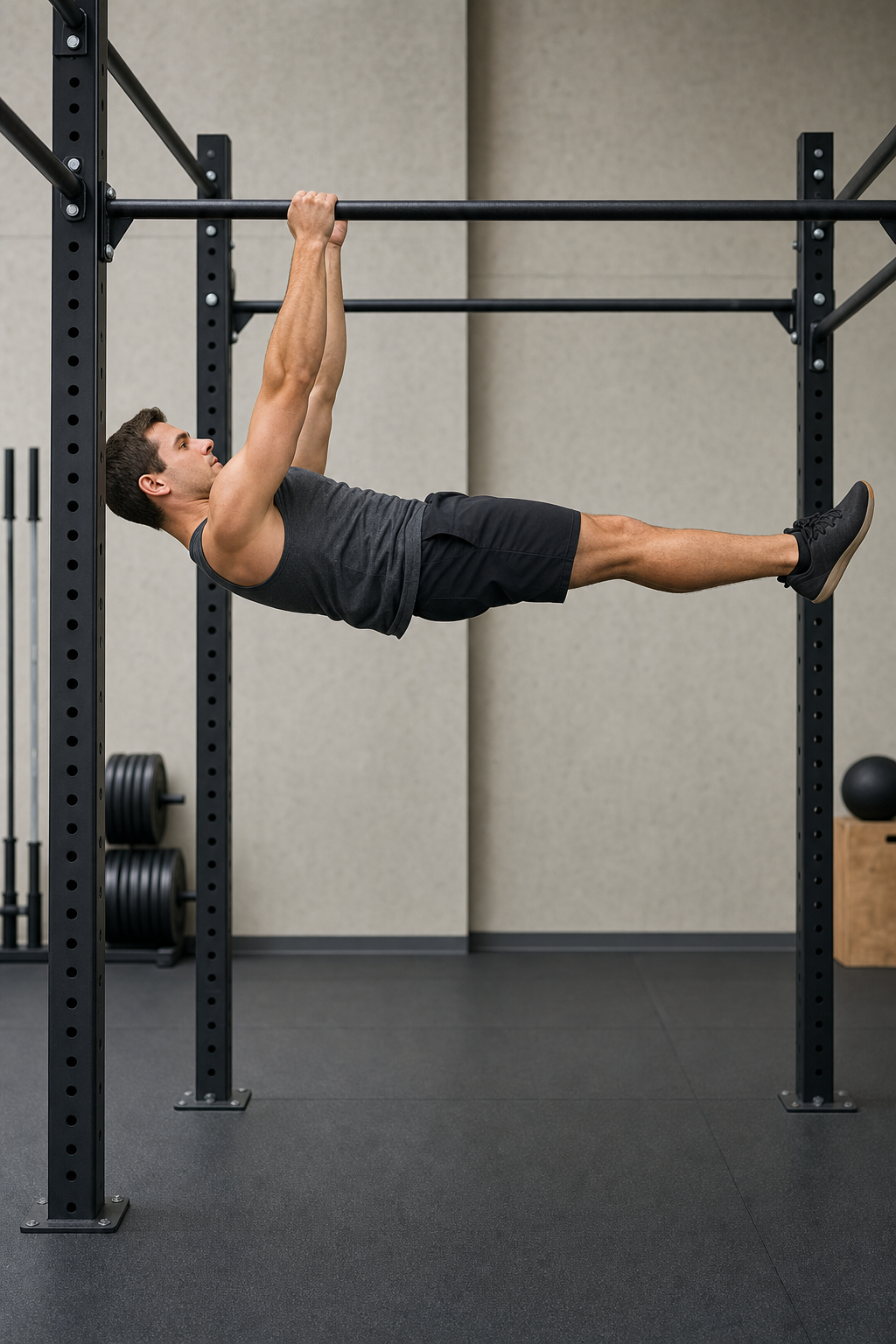
How to perform Front Lever Negative
- Start hanging from a pull-up bar with a shoulder-width grip.
- Pull yourself into a tucked or advanced front lever position.
- Slowly lower your body from the bar, keeping your body straight.
- Control the descent as much as possible.
- Return to the start and repeat.
What is Front Lever Negative?
A front lever negative is a controlled lowering drill that starts above or near a front lever and finishes in a hang. It develops straight-arm pulling strength and body-line control through the eccentric phase of the front lever.
What muscles does Front Lever Negative work?
The lats, teres major, upper back, and long head of the triceps help keep the arms straight and pull the shoulders down. The abdominals, obliques, glutes, hip flexors, and spinal stabilizers maintain the chosen tuck or straight-body shape.
Front Lever Negative form cues and common mistakes
- Master active hangs and a repeatable tuck lever before using a harder negative variation.
- Lock the elbows, depress the shoulder blades, and begin with the torso and hips moving together.
- Use a tuck, advanced tuck, or single-leg shape that allows a slow descent instead of dropping through the range.
- Keep the ribs down and pelvis controlled so the lower back does not arch as the lever opens.
- Finish in an active hang under control and stop if the shoulders, elbows, or lower back become painful.
How to add Front Lever Negative to a workout
Train front lever negatives early in a calisthenics session while the grip and shoulders are fresh. Perform 3 to 5 sets of 1 to 3 descents lasting about 3 to 8 seconds. Increase the lowering time before moving to a longer-lever body shape.
Frequently asked questions
How long should a front lever negative take?
Aim first for a controlled 3- to 5-second descent. Build toward 6 to 8 seconds before choosing a harder body shape, provided the elbows stay straight and the hips do not drop early.
Which front lever negative progression should I use?
Use the easiest shape that you can lower without falling: tuck, advanced tuck, one leg, straddle, then full. A slower tuck negative is more useful than an uncontrolled full-body attempt.
Do front lever negatives build the full front lever?
They can build useful eccentric strength and body awareness, but they work best alongside active hangs, rows, tuck holds, and other straight-arm pulling drills.
Use controlled movement and an appropriate variation for your current ability. Stop if an exercise causes sharp pain, and seek qualified guidance when needed.