

Handstand Shoulder Tap exercise
A balance and stability drill involving alternating shoulder taps in a handstand.
Updated By PumpPal
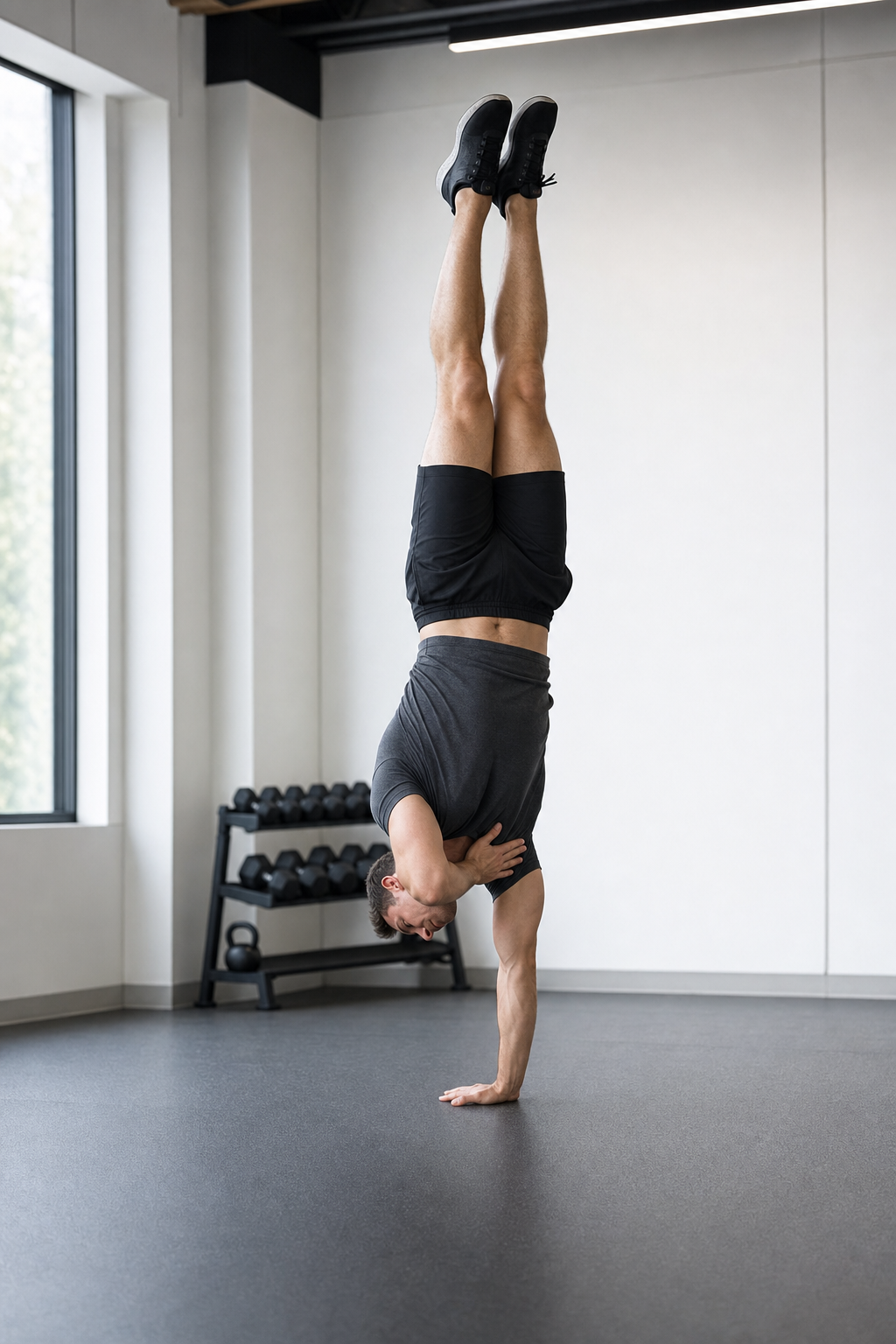
How to perform Handstand Shoulder Tap
- Kick up into a handstand, free-standing or on a wall.
- Engage core and glutes to stay stable.
- Lift one hand to tap the opposite shoulder.
- Lower hand and repeat on the other side.
- Alternate taps, staying balanced throughout.
- Repeat for desired reps.
What is Handstand Shoulder Tap?
A handstand shoulder tap is an inverted balance drill in which you shift onto one hand, briefly tap the opposite shoulder, and replace the hand with control. The freestanding version demands more balance than a wall handstand shoulder tap, so most athletes should first master wall holds and controlled weight shifts.
What muscles does Handstand Shoulder Tap work?
The supporting shoulder, triceps, serratus anterior, upper back, forearm, wrist, and hand carry the upper-body load. The abdominal wall, obliques, spinal stabilizers, glutes, and legs resist rotation and keep the body stacked during each weight shift.
Handstand Shoulder Tap form cues and common mistakes
- Use a clear nonslip area, warm the wrists and shoulders, and practice a safe exit before attempting freestanding repetitions.
- Establish a stable handstand with straight elbows, active shoulders, a braced trunk, and the legs together before shifting weight.
- Move the shoulders slightly over the supporting hand first; lift the other hand only after the supporting side feels stable.
- Tap lightly and replace the hand quietly, keeping the hips and legs from rotating to create momentum.
- Regress to wall-assisted weight shifts or brief hand lifts if balance, active shoulder position, or a controlled exit becomes uncertain.
How to add Handstand Shoulder Tap to a workout
Place handstand shoulder taps near the start of a skill session after warming up. Begin with 3 to 5 sets of 1 to 4 controlled taps per side and rest fully between sets. Build stable singles before linking longer alternating sets.
Frequently asked questions
Should I learn wall handstand shoulder taps first?
Usually, yes. Wall-supported holds, side-to-side weight shifts, and small hand lifts let you practice supporting one arm without also managing full freestanding balance.
How do I stop twisting during handstand shoulder taps?
Shift the shoulders over the supporting hand before lifting, press tall through that shoulder, brace the abdomen and glutes, and keep the legs together. Use a smaller hand lift if the hips still rotate.
How many handstand shoulder taps should I do?
Start with 1 to 4 controlled taps per side for 3 to 5 sets. End the set before the supporting elbow bends, the body twists sharply, or the hand placement becomes noisy and rushed.
Use controlled movement and an appropriate variation for your current ability. Stop if an exercise causes sharp pain, and seek qualified guidance when needed.