

Wall Walk exercise
An advanced core and shoulder stability exercise that involves walking your feet up a wall while maintaining a plank position. It strengthens the entire upper body, including the core, shoulders, and chest, while improving balance and coordination.
Updated By PumpPal
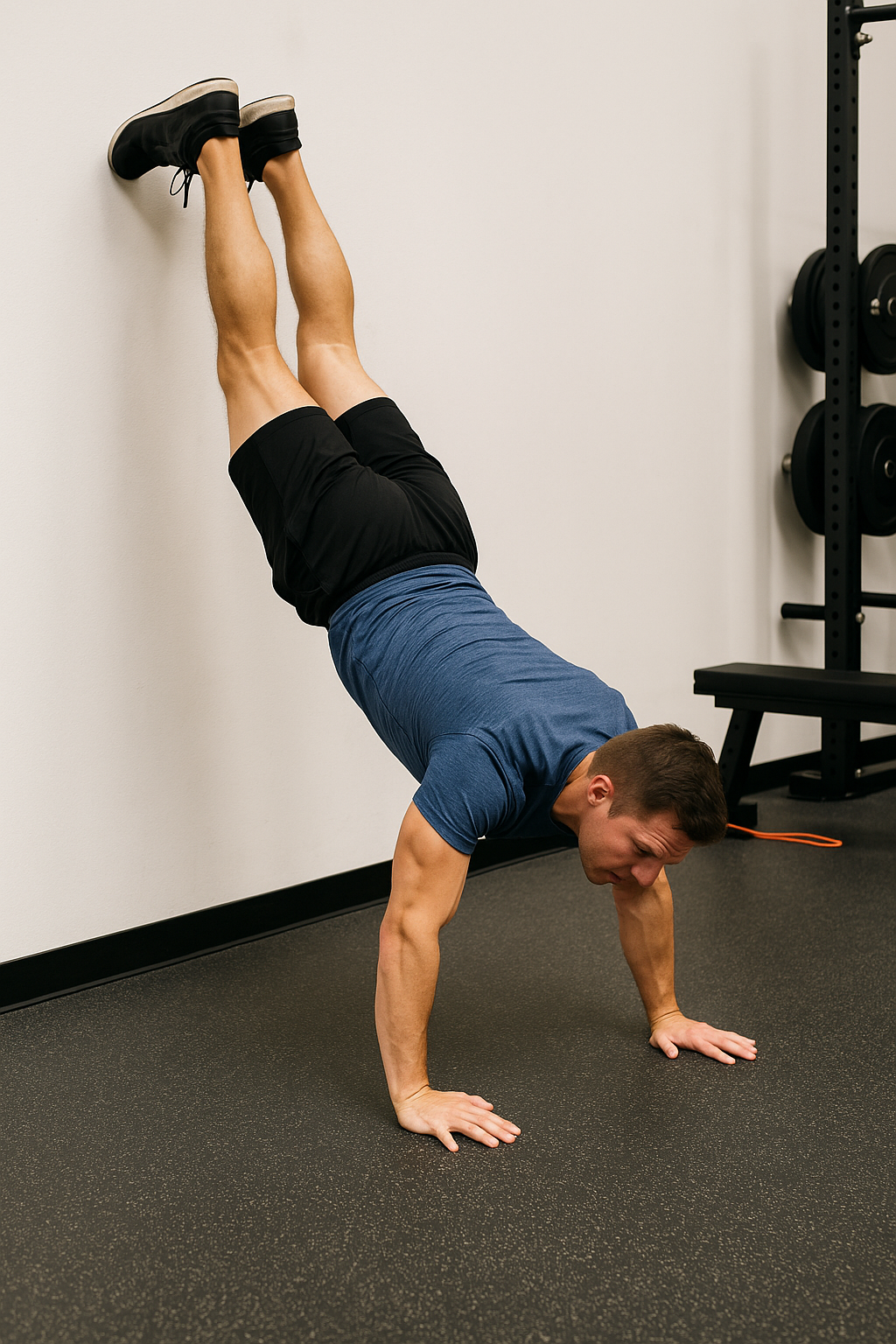
How to perform Wall Walk
- Start in a push-up position with your feet against a wall.
- Begin walking your feet up the wall as you simultaneously walk your hands backward toward the wall.
- Keep your core tight and move slowly to maintain control.
- Pause when your chest is close to the wall and you’re nearly vertical.
- Walk your hands forward and feet down the wall to return to the starting position.
- Repeat for the desired number of reps, keeping movement controlled throughout.
What is Wall Walk?
The wall walk moves from a plank with the feet at a wall toward a chest-to-wall handstand and back down. It develops overhead strength, inverted confidence, and whole-body tension through a controlled moving range.
What muscles does Wall Walk work?
The shoulders, triceps, upper chest, serratus anterior, traps, and rotator cuff support the upper body. The forearms, hands, abdominal wall, spinal stabilizers, glutes, quadriceps, and hip flexors keep the body controlled against the wall.
Wall Walk form cues and common mistakes
- Use a sturdy clear wall and nonslip floor, remove nearby objects, and practice the exit before walking close to vertical.
- Start in a strong plank with the soles against the wall, hands under the shoulders, elbows straight, and abdomen and glutes braced.
- Walk the feet upward in small steps while moving the hands toward the wall, keeping the hips from sagging or racing ahead of the shoulders.
- Stop at the closest position you can control, pause briefly, then reverse with small coordinated hand and foot steps instead of dropping down.
- Use a shorter climb or pike walkout if control fades, and stop for wrist, elbow, shoulder, neck, head, or lower-back pain or dizziness.
How to add Wall Walk to a workout
Use wall walks early in bodyweight or overhead training after the wrists and shoulders are warm. Start with 3 to 5 sets of 1 to 3 controlled repetitions. Progress by moving slightly closer to the wall before adding more total reps.
Frequently asked questions
What muscles do wall walks work?
They train the shoulders, triceps, upper chest, serratus, traps, and rotator cuff while the hands, forearms, core, glutes, and legs stabilize the moving plank and handstand positions.
How close should I walk to the wall?
Stop where you can keep straight elbows, controlled ribs and pelvis, and enough strength to reverse safely. You do not need to touch the chest to the wall on early progressions.
How can I make wall walks easier?
Take only a few steps up the wall, use an elevated pike walkout, or practice planks and chest-to-wall holds separately. Increase height only when the descent remains controlled.
Use controlled movement and an appropriate variation for your current ability. Stop if an exercise causes sharp pain, and seek qualified guidance when needed.