

Incline Reverse-Grip Bench Press exercise
An incline bench press with an underhand grip, targeting the upper chest and triceps.
Updated By PumpPal
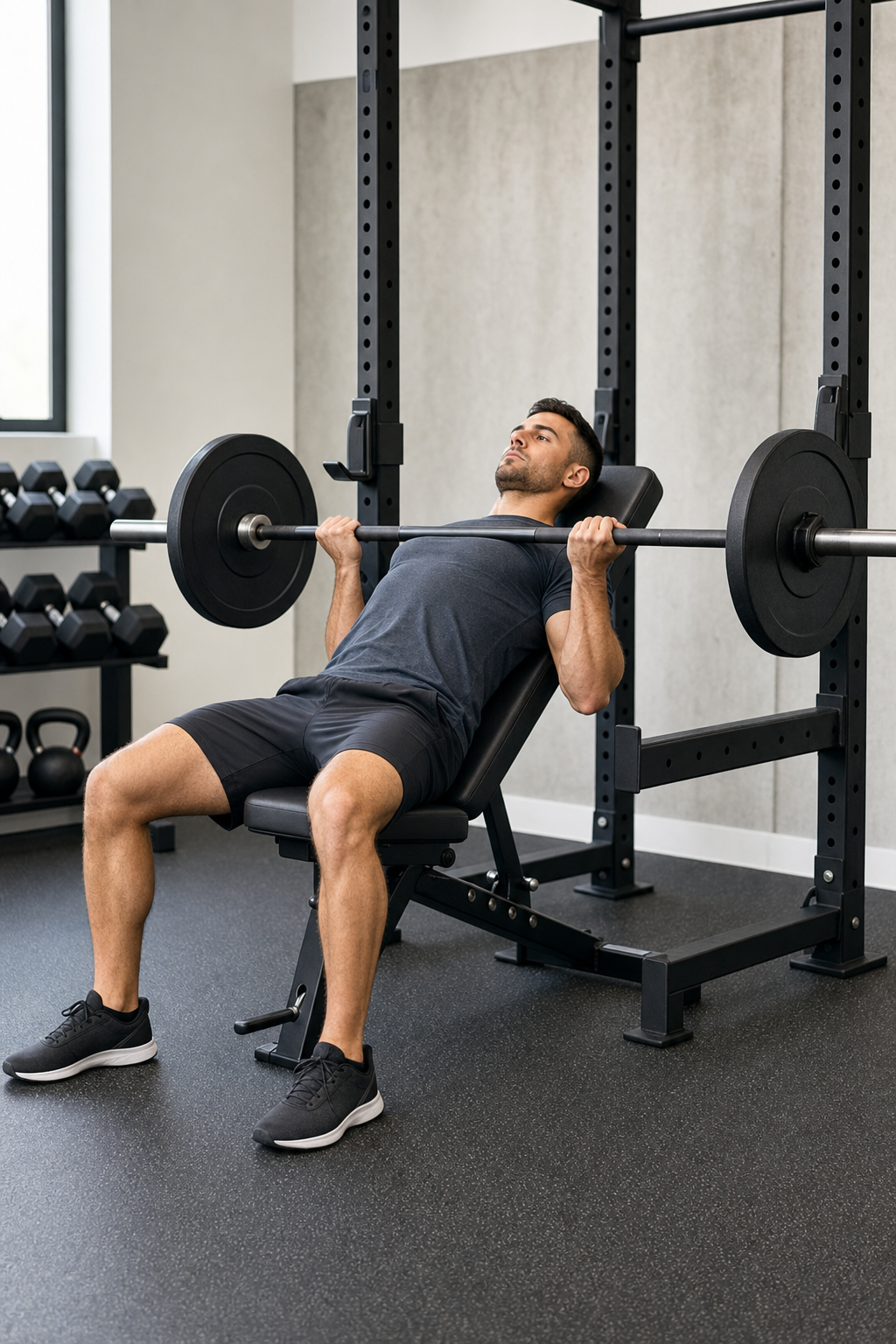
How to perform Incline Reverse-Grip Bench Press
- Set a bench to an incline position.
- Lie back and grip the barbell with an underhand grip.
- Unrack the barbell.
- Lower it to your upper chest.
- Press up until arms are extended.
- Repeat for desired reps.
- Rack the barbell after finishing.
What is Incline Reverse-Grip Bench Press?
The incline reverse-grip bench press is an incline barbell press performed with the palms facing toward the lifter. The bench angle and underhand grip change the elbow and bar path, emphasizing the upper chest and triceps while requiring careful setup and a controlled hand position.
What muscles does Incline Reverse-Grip Bench Press work?
The upper and middle chest, triceps, and front shoulders produce the press. The forearms, grip, rotator cuff, serratus anterior, upper back, lats, and trunk stabilize the underhand bar position and incline bench setup.
Incline Reverse-Grip Bench Press form cues and common mistakes
- Use a stable incline bench inside a rack, set the hooks and safeties before loading, and use a spotter or controlled handoff because an underhand unrack can be awkward.
- Take a closed underhand grip that keeps the wrists stacked comfortably over the forearms; start light and do not force a grip width that strains the wrists or elbows.
- Keep the upper back supported, feet planted, and shoulder blades controlled as the bar travels toward the upper-to-mid chest along a repeatable path.
- Press smoothly without letting the elbows flare suddenly, the wrists fold backward, or the bar drift toward the face or stomach.
- Rack only when both arms are controlled and stop for sharp wrist, elbow, shoulder, chest, or neck pain.
How to add Incline Reverse-Grip Bench Press to a workout
Treat this as a technical press rather than a max-effort variation. Start with 3 to 4 sets of 6 to 12 controlled repetitions, leaving at least 3 reps in reserve. Add load only when the grip, unrack, bar path, and rerack remain consistent.
Frequently asked questions
What muscles does the incline reverse-grip bench press work?
It trains the upper and middle chest, triceps, and front shoulders while the forearms, grip, rotator cuff, upper back, lats, serratus, and core stabilize the bar.
Why use a spotter for a reverse-grip bench press?
The underhand hand position can make unracking and reracking less natural than a standard press. A competent spotter or controlled handoff reduces the need to twist the wrists or shoulders under load.
How is the incline reverse-grip press different from the flat version?
The incline bench changes the torso angle and generally adds upper-chest and front-shoulder demand. The flat reverse-grip press uses a horizontal bench and a different bar path relative to the torso.
Use controlled movement and an appropriate variation for your current ability. Stop if an exercise causes sharp pain, and seek qualified guidance when needed.