

Lateral Wall Walk exercise
A handstand drill walking hands and feet side-to-side along a wall to develop control.
Updated By PumpPal
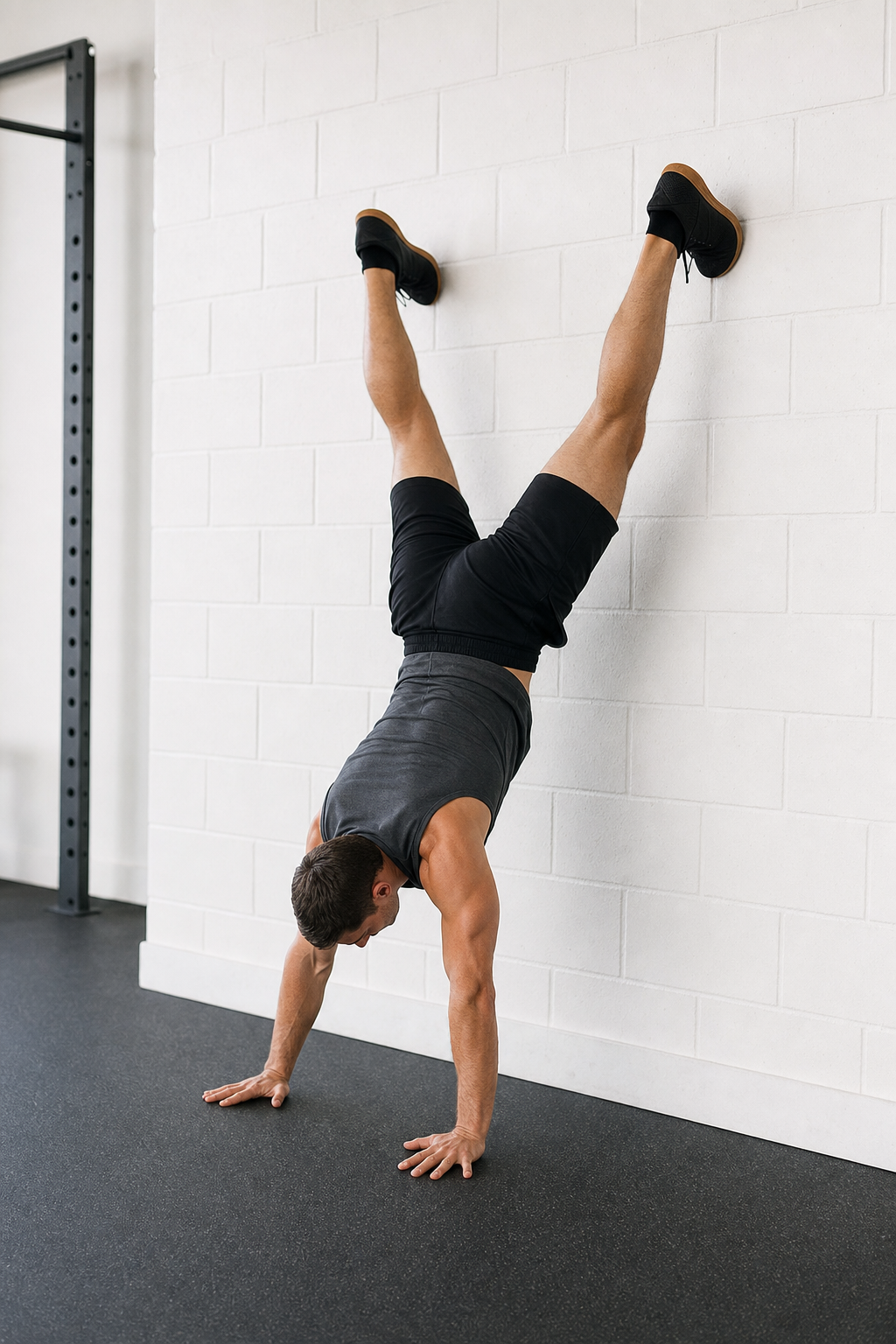
How to perform Lateral Wall Walk
- Kick up into a wall-supported handstand.
- Shift hands and feet sideways along the wall.
- Move in small steps to one side.
- Reverse direction for equal reps.
- Focus on controlled movement and body alignment.
What is Lateral Wall Walk?
The lateral wall walk is a wall-supported handstand drill in which the hands and feet take small coordinated steps sideways. Unlike a standard wall walk that travels from a plank toward the wall, this variation stays inverted and moves laterally to build overhead control.
What muscles does Lateral Wall Walk work?
The shoulders, triceps, upper trapezius, serratus anterior, and forearms support the body. The abdominals, obliques, spinal stabilizers, glutes, and legs keep the torso organized while weight shifts from side to side.
Lateral Wall Walk form cues and common mistakes
- Warm the wrists and shoulders, clear the floor, and use a wall with enough open space in both directions.
- Enter a wall-supported handstand you can exit safely before attempting any sideways steps.
- Push the floor away, brace the abdomen and glutes, and move one hand and the matching foot only a small distance at a time.
- Keep the hips close to the wall and avoid crossing the hands or rushing through an unstable weight shift.
- Reverse direction for balanced practice and come down before shoulder, wrist, or balance control deteriorates.
How to add Lateral Wall Walk to a workout
Practice lateral wall walks early in a handstand session after warming up. Begin with 2 to 4 sets of 2 to 5 controlled steps in each direction. Progress the number of clean steps before increasing distance or moving the body farther from the wall.
Frequently asked questions
What muscles do lateral wall walks work?
They train the shoulders, triceps, upper trapezius, serratus anterior, and forearms while the core, glutes, and legs stabilize the inverted body during each sideways shift.
How is a lateral wall walk different from a regular wall walk?
A lateral wall walk moves sideways while you remain in a supported handstand. A regular wall walk usually begins in a plank and moves the hands toward the wall as the feet climb upward.
How can I make lateral wall walks easier?
Practice side-to-side weight shifts in a pike position or wall-supported handstand before moving the hands. Then add one small step per side while keeping a safe exit available.
Use controlled movement and an appropriate variation for your current ability. Stop if an exercise causes sharp pain, and seek qualified guidance when needed.