

Scapular Wall Handstand Shrug exercise
A wall handstand variation shrugging shoulders for upper trap and scapular activation.
Updated By PumpPal
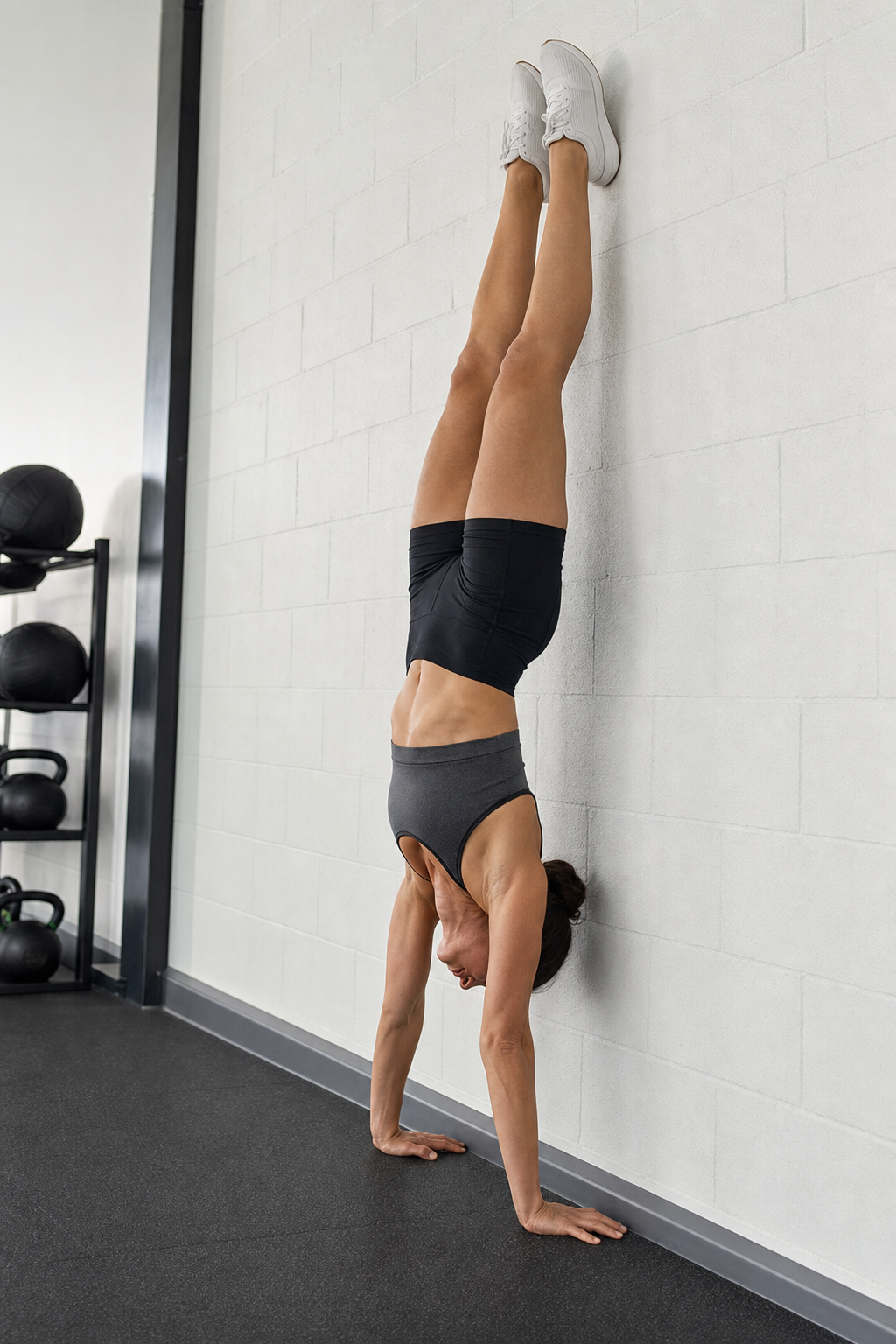
How to perform Scapular Wall Handstand Shrug
- Kick up into a wall-supported handstand.
- Keep arms straight and core tight.
- Shrug shoulders upward, then lower them down.
- Focus on moving only at the shoulders.
- Repeat shrugging for desired reps.
What is Scapular Wall Handstand Shrug?
The scapular wall handstand shrug is a wall-supported handstand drill performed with straight elbows while the shoulder blades elevate and lower the body slightly. It trains active overhead support without turning the movement into a handstand push-up.
What muscles does Scapular Wall Handstand Shrug work?
The upper trapezius and serratus anterior drive and control the shoulder-blade movement. The deltoids, triceps, rotator cuff, forearms, hands, abdominal wall, glutes, and legs stabilize the straight-arm inverted position.
Scapular Wall Handstand Shrug form cues and common mistakes
- Warm the wrists and shoulders, use a clear wall space, and choose a handstand entry and exit you can repeat safely.
- Lock the elbows and press the floor away so the motion comes from elevating and lowering the shoulder blades rather than bending the arms.
- Brace the abdomen and glutes to keep the ribs controlled and avoid exaggerating the lower-back arch.
- Use a small, smooth range and keep the head neutral between the arms instead of pushing it forward as the shoulders move.
- Practice pike scapular shrugs or a less vertical wall angle if balance, wrist comfort, or shoulder control breaks before the target repetitions.
How to add Scapular Wall Handstand Shrug to a workout
Use wall handstand shrugs early in a handstand or overhead-strength session after warming up. Begin with 3 to 4 sets of 5 to 12 controlled repetitions. Progress range and consistency before adding reps, and leave enough strength for a controlled exit from every set.
Frequently asked questions
What muscles do wall handstand shrugs work?
They emphasize the upper trapezius and serratus anterior while the shoulders, triceps, rotator cuff, forearms, hands, core, glutes, and legs stabilize the inverted position.
Do I bend my elbows during handstand shrugs?
No. Keep the elbows straight and move by elevating and lowering the shoulder blades. If the elbows bend, reduce the range or use a pike scapular-shrug progression.
How many wall handstand shrugs should I do?
Start with 3 to 4 sets of 5 to 12 smooth repetitions. End the set before the elbows bend, the lower back arches excessively, or you lose the ability to exit the handstand safely.
Use controlled movement and an appropriate variation for your current ability. Stop if an exercise causes sharp pain, and seek qualified guidance when needed.