

Wall Pike Walkout exercise
A challenging bodyweight move that builds shoulder strength, flexibility, and core control by transitioning from a pike position into a handstand against the wall and back down.
Updated By PumpPal
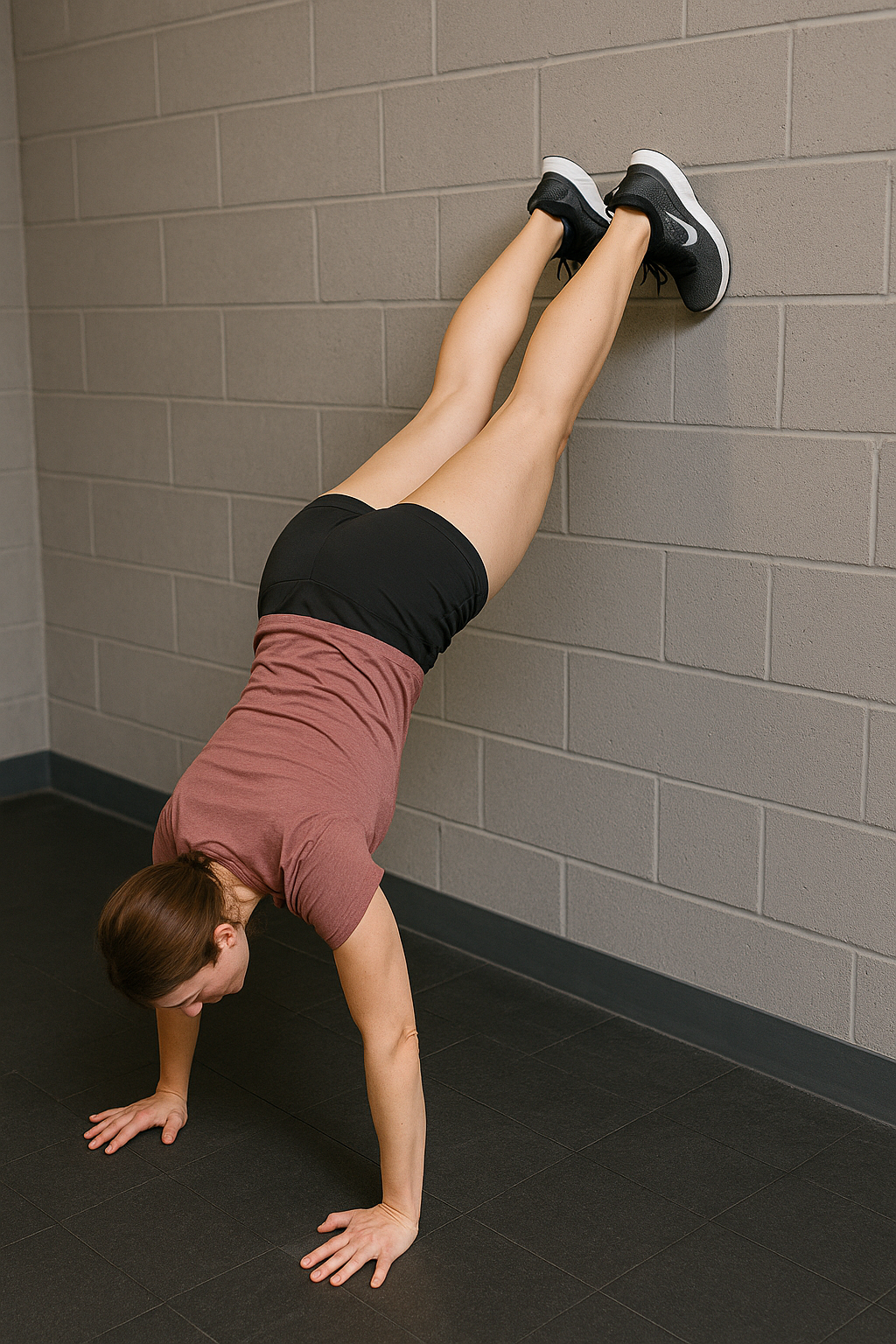
How to perform Wall Pike Walkout
- Start in a downward dog position with feet close to a wall.
- Walk your feet up the wall while walking your hands closer to the wall.
- Stop in a pike position with hips high and legs on the wall.
- Hold for a brief pause while keeping your core and shoulders engaged.
- Walk your hands and feet back to the starting position with control.
- Repeat for reps or time, maintaining proper form.
What is Wall Pike Walkout?
The wall pike walkout is a wall-assisted inversion drill that walks the feet up the wall and the hands backward until the hips are high over the shoulders. It stops in a controlled pike or partial inversion, making it a useful bridge between floor pike work and a fuller wall walk.
What muscles does Wall Pike Walkout work?
The shoulders, triceps, upper trapezius, serratus anterior, and upper back support the inverted position. The abdominals, obliques, spinal stabilizers, glutes, legs, forearms, and hands maintain body control as weight shifts toward the arms.
Wall Pike Walkout form cues and common mistakes
- Use a clear wall and nonslip floor, remove nearby objects, and plan how you will walk back down before starting.
- Begin in a downward-dog or short plank position with the feet close to the wall and the hands spread firmly.
- Take small alternating steps with the feet and hands while keeping the shoulders active and the movement slow.
- Stop at a pike angle you can hold without collapsing, arching excessively, or moving closer than you can reverse safely.
- Walk out under control and regress to a box pike hold if the wrists, shoulders, balance, or exit become uncertain.
How to add Wall Pike Walkout to a workout
Practice wall pike walkouts early in a bodyweight or handstand session while fresh. Start with 3 to 5 sets of 1 to 5 controlled walkouts or 10- to 20-second pike holds. Progress by improving the stacked position before moving closer to the wall.
Frequently asked questions
What muscles do wall pike walkouts work?
They train the shoulders, triceps, upper trapezius, serratus anterior, upper back, forearms, hands, and core while the glutes and legs help control the wall-supported position.
How is a wall pike walkout different from a wall walk?
A wall pike walkout stops in a partial inversion with the hips high, while a full wall walk usually continues until the torso is nearly vertical and the chest is closer to the wall.
How can I make wall pike walkouts easier?
Practice a pike hold with the feet on a low box, take fewer steps up the wall, or shorten the hold. Always keep enough strength to reverse the movement safely.
Use controlled movement and an appropriate variation for your current ability. Stop if an exercise causes sharp pain, and seek qualified guidance when needed.