

Inchworm exercise
A full-body mobility and strength movement that engages the core, shoulders, chest, and hamstrings. It also improves flexibility and is often used in warm-ups or as part of a bodyweight circuit.
Updated By PumpPal
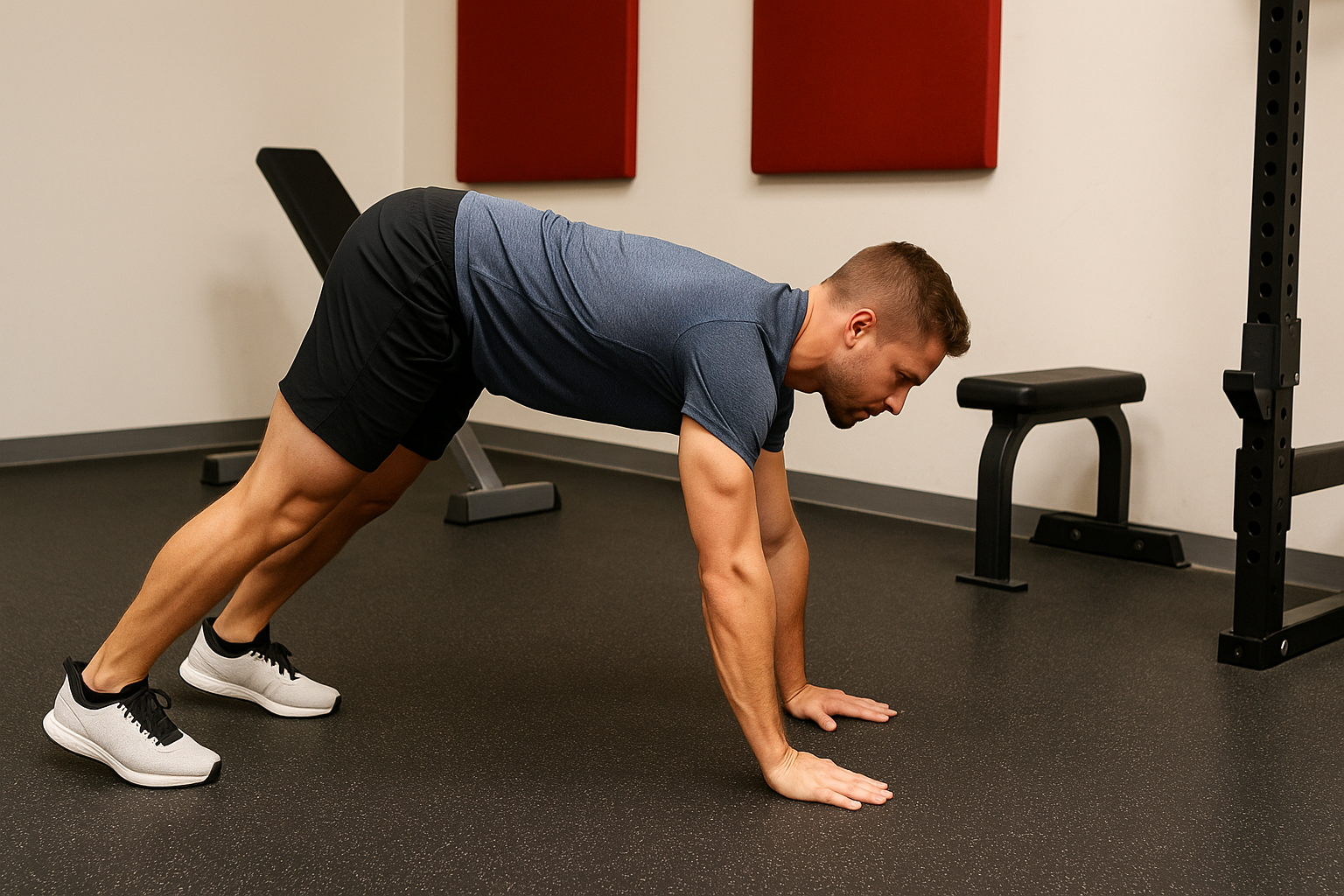
How to perform Inchworm
- Stand tall with your feet hip-width apart.
- Bend at the hips and walk your hands forward into a high plank position.
- Hold the plank briefly, engaging your core and keeping your body in a straight line.
- Walk your feet forward to meet your hands, keeping your legs as straight as your flexibility allows.
- Repeat the movement for the desired distance or number of reps.
- Maintain controlled motion and avoid sagging your hips during the plank.
What is Inchworm?
The inchworm is a dynamic bodyweight movement that alternates a standing hip hinge, a hand walkout to a high plank, and a controlled return. It combines hamstring mobility with shoulder, core, and plank strength and is commonly used in warm-ups and bodyweight circuits.
What muscles does Inchworm work?
The shoulders, chest, triceps, serratus anterior, abdominal wall, and hip stabilizers support the hand walk and plank. The hamstrings, calves, glutes, spinal stabilizers, wrists, and forearms control the hinge, forward reach, and return to standing.
Inchworm form cues and common mistakes
- Start tall with clear floor space, soften the knees as needed, and hinge at the hips until the hands can reach the floor without forcing the hamstrings or rounding aggressively.
- Walk the hands forward in small steps while the feet stay planted and the abdomen remains braced rather than dropping the hips toward the floor.
- Stop in a strong high plank with the hands under or slightly ahead of the shoulders, elbows straight but not snapped back, and head aligned with the trunk.
- Walk the feet toward the hands with short controlled steps, bending the knees enough to keep balance, then stand tall before the next repetition.
- Shorten the walkout or place the hands on a stable raised surface to regress, and stop for sharp wrist, shoulder, back, hip, or hamstring pain.
How to add Inchworm to a workout
Use inchworms in a general warm-up or low-volume conditioning circuit. Start with 2 to 3 sets of 4 to 8 controlled repetitions or 10 to 20 meters. Keep the pace deliberate and reduce the range before adding speed or a push-up.
Frequently asked questions
What muscles does the inchworm exercise work?
It trains the shoulders, chest, triceps, serratus, core, wrists, and forearms during the hand walk and plank, while the hamstrings, calves, glutes, and spinal stabilizers control the hinge and return.
Are inchworms a stretch or a strength exercise?
They combine both. The standing hinge creates a dynamic hamstring and calf mobility demand, while the hand walk and high plank require shoulder, arm, and core strength.
How many inchworms should I do in a warm-up?
Begin with 4 to 8 slow repetitions or a short 10- to 20-meter distance. Use fewer reps if the wrists, shoulders, hamstrings, or plank position begin to lose control.
Use controlled movement and an appropriate variation for your current ability. Stop if an exercise causes sharp pain, and seek qualified guidance when needed.