

Isometric Chin-Up Hold exercise
Hold your body still at a fixed position in a chin-up to train grip and pulling endurance.
Updated By PumpPal
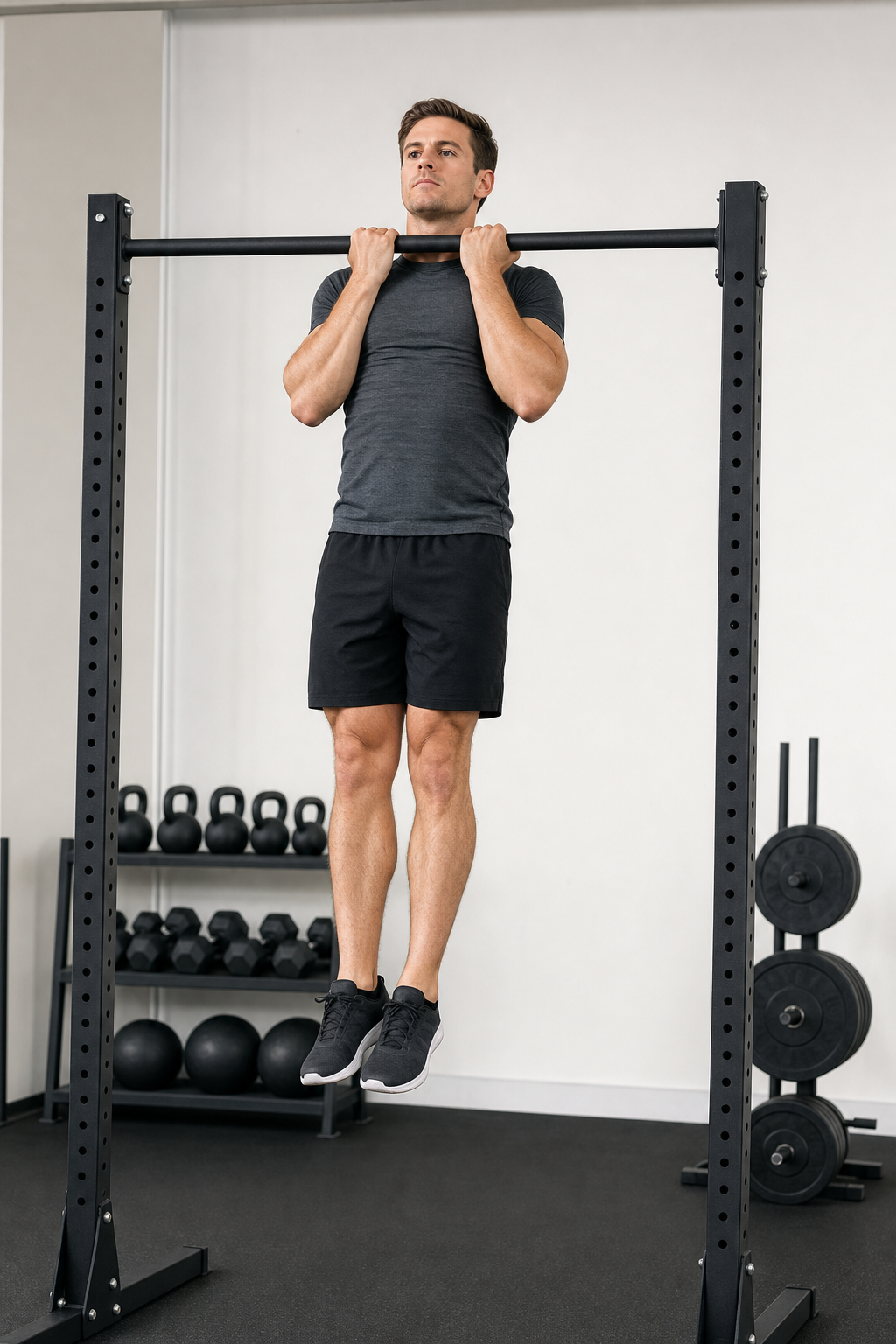
How to perform Isometric Chin-Up Hold
- Grab the bar with a supinated (palms facing you) grip.
- Pull yourself up to the desired hold position (e.g., chin over the bar).
- Keep your chin above the bar, elbows bent.
- Engage your back and core muscles.
- Hold the position for the set duration.
- Lower yourself down with control.
What is Isometric Chin-Up Hold?
An isometric chin-up hold pauses the body at a chosen point of an underhand chin-up without moving. Holds can target the top, middle, or another weak angle; a 90-degree chin-up hold is the more specific mid-range version, while a top-position hold keeps the chin above the bar.
What muscles does Isometric Chin-Up Hold work?
The biceps, brachialis, brachioradialis, lats, rear shoulders, and upper back maintain the elbow and shoulder angles. The forearms, grip, rotator cuff, abdominal wall, glutes, and spinal stabilizers keep the body controlled beneath the bar.
Isometric Chin-Up Hold form cues and common mistakes
- Choose the hold angle before the set and reach it through a controlled chin-up, a step or box, or assistance rather than an uncontrolled jump.
- Keep the shoulders connected and the chest comfortably tall without craning the neck or forcing the chin over the bar.
- Brace the abdomen and glutes so the legs remain quiet and swinging does not create a false longer hold.
- End the repetition when the intended joint angle changes substantially, then lower under control or place the feet back on support.
- Use a resistance band or light foot support to accumulate clean time and stop for sharp wrist, elbow, biceps, shoulder, or neck pain.
How to add Isometric Chin-Up Hold to a workout
Practice isometric holds after warming up and before high-fatigue pulling accessories. Start with 3 to 5 sets of 5 to 15 seconds at one or two angles, leaving a few seconds in reserve. Build toward 20- to 30-second controlled holds before adding load.
Frequently asked questions
What do isometric chin-up holds improve?
They build strength and control at the angle being held while training grip, elbow flexors, lats, upper back, and body tension. They can help target a repeatable sticking point.
Where should I hold an isometric chin-up?
Use the top, middle, or another angle where you want more control. Keep the chosen position consistent between sets so hold times are comparable.
How can I make chin-up holds easier?
Use a resistance band, keep one or both feet lightly supported, or shorten the hold. Assistance should preserve the same shoulder and elbow position rather than letting the body slowly drop.
Use controlled movement and an appropriate variation for your current ability. Stop if an exercise causes sharp pain, and seek qualified guidance when needed.