

Negative Ring Dip exercise
A strength-building exercise focusing on the lowering (eccentric) phase of the ring dip.
Updated By PumpPal
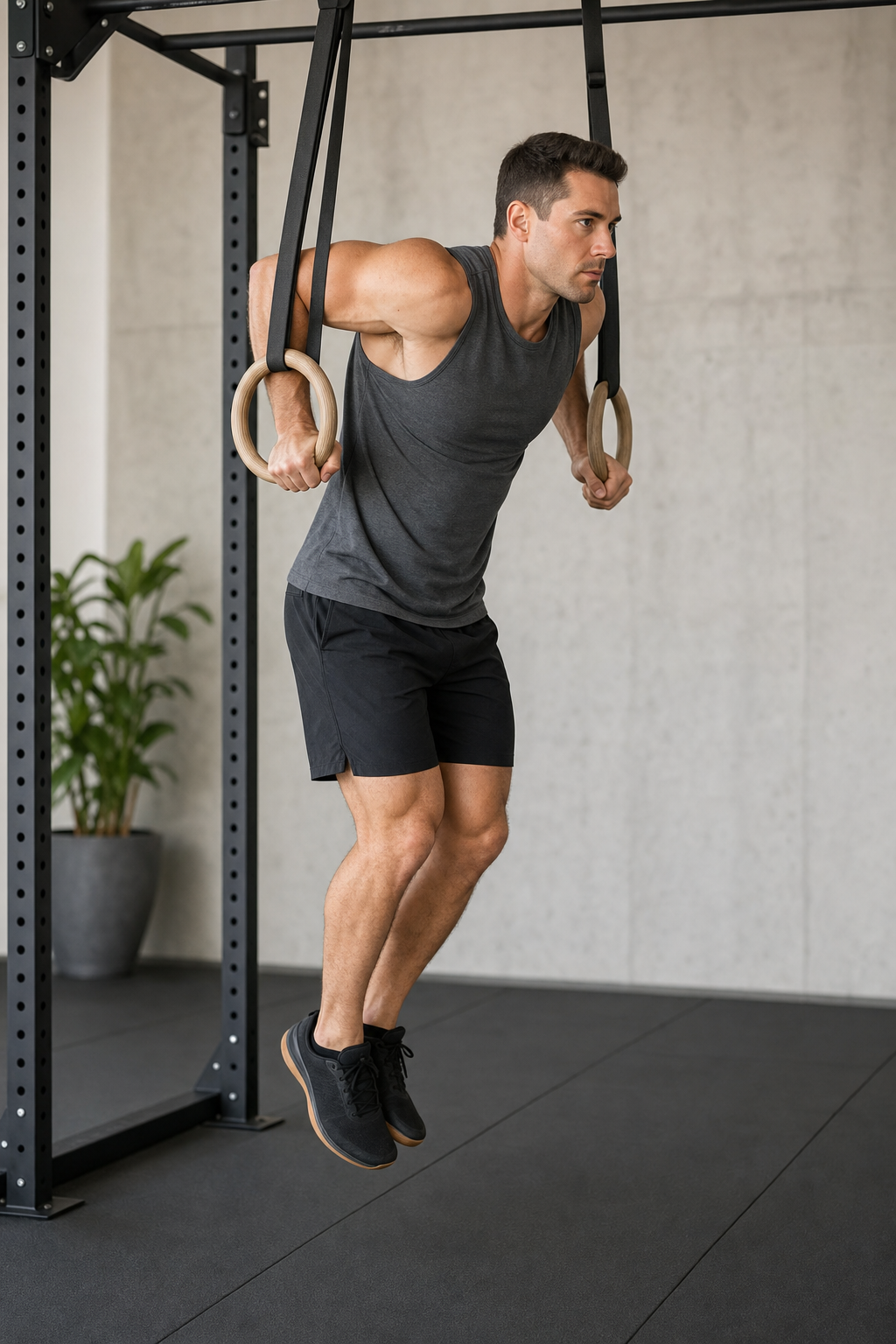
How to perform Negative Ring Dip
- Set rings at dip height and grip firmly.
- Support your body above the rings with straight arms.
- Slowly lower yourself to the bottom of a dip position.
- Pause briefly at the bottom.
- Step down or assist yourself back to the start.
- Repeat the controlled lowering for each rep.
What is Negative Ring Dip?
The negative ring dip trains only the lowering phase of a ring dip. You begin in a supported top position, descend slowly with the rings controlled near the body, then use the feet or another safe assist to return to the start instead of pressing back up.
What muscles does Negative Ring Dip work?
The triceps, chest, and front deltoids work eccentrically to control the descent. The rotator cuff, lats, upper back, forearms, hands, abdominal wall, and glutes stabilize the free-moving rings and keep the torso organized.
Negative Ring Dip form cues and common mistakes
- Set the rings at a height that lets you step or lightly jump into support and step down safely after every descent.
- Begin with straight arms, active shoulders, and the rings close to the sides rather than letting them drift wide.
- Lower for about three to five seconds while keeping the forearms controlled and the torso only slightly forward.
- Use a pain-free depth; stop before the shoulders roll forward or the rings become too unstable to control.
- Place the feet down between repetitions and reset the top position instead of turning the drill into an uncontrolled full dip.
How to add Negative Ring Dip to a workout
Use negative ring dips early in a ring-strength session after support holds are solid. Begin with 3 to 5 sets of 2 to 5 descents lasting about three to five seconds each. Rest fully and progress total controlled time before attempting an unassisted press from the bottom.
Frequently asked questions
Are negative ring dips good for learning ring dips?
They can build eccentric strength and familiarity with the ring path, but you should first be able to hold a stable top support. Assisted full-range dips and parallel-bar dips can complement the progression.
How slow should a negative ring dip be?
Aim for a smooth three- to five-second descent. Use a shorter range or more assistance if you drop quickly, lose the ring position, or cannot step down safely at the bottom.
How many negative ring dips should I do?
Start with 3 to 5 sets of 2 to 5 controlled descents. Keep the volume low because eccentric work can be demanding, and stop when you cannot maintain the same lowering time and shoulder position.
Use controlled movement and an appropriate variation for your current ability. Stop if an exercise causes sharp pain, and seek qualified guidance when needed.