

Treadmill Incline Walk exercise
A low-impact cardio exercise that improves endurance and lower body strength. It’s easy on the joints and great for tracking metrics like speed, time, distance, and calories burned.
Updated By PumpPal
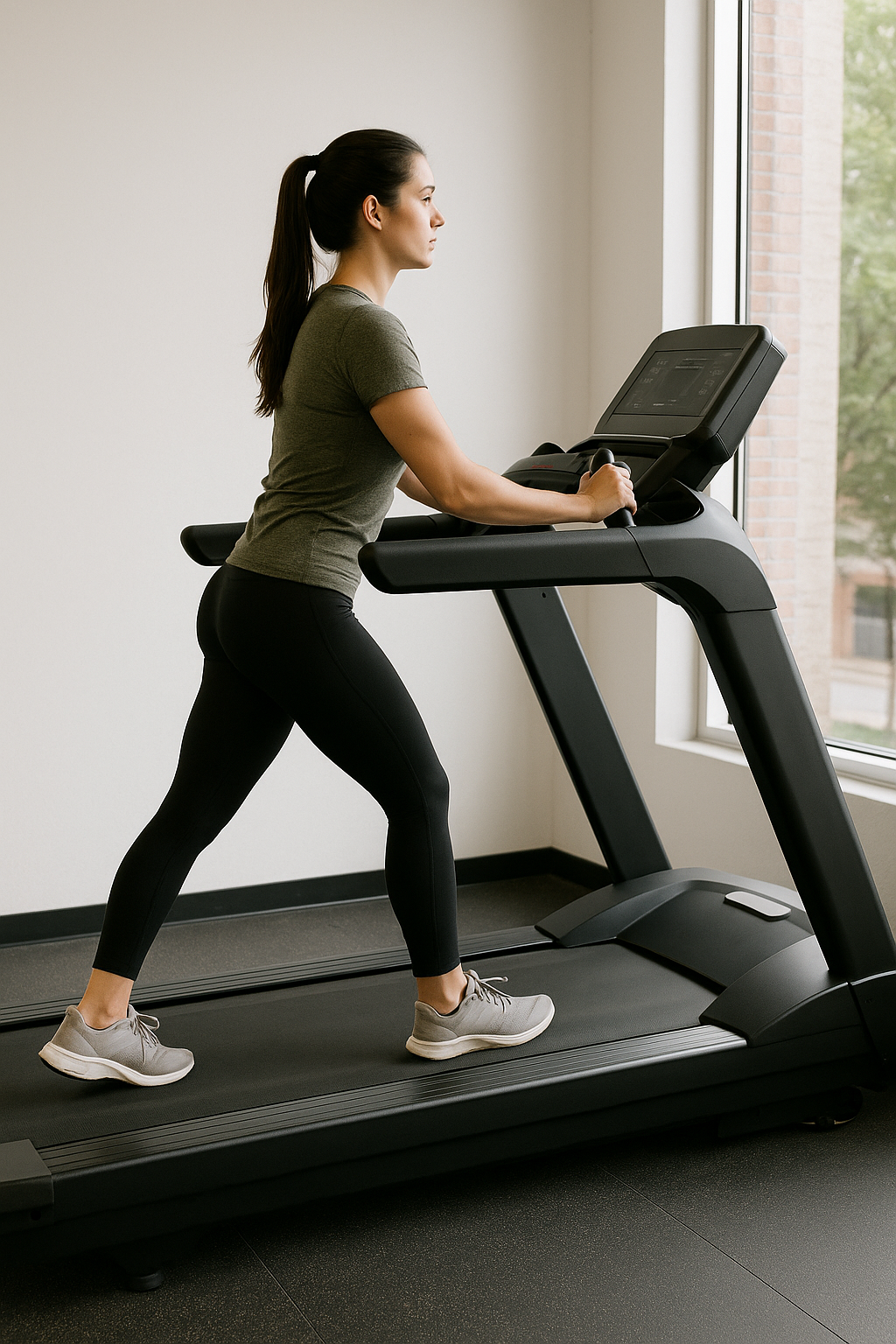
How to perform Treadmill Incline Walk
- Start by selecting a treadmill with incline functionality.
- Warm up by walking on a flat incline for 3–5 minutes at a moderate pace.
- Set the incline to 8–15% and the speed to a brisk walk (3.0–4.0 mph).
- Walk for your desired time or distance, monitoring progress on the treadmill display.
- Maintain a tall posture and engage your core throughout the walk.
- Cool down by reducing the incline and speed gradually over 3–5 minutes.
What is Treadmill Incline Walk?
A treadmill incline walk is a low-impact cardio session performed while the belt is raised to simulate uphill walking. Speed and incline can be adjusted independently, making it easy to scale effort and track time, distance, pace, and elevation-related workload.
What muscles does Treadmill Incline Walk work?
The glutes, calves, quadriceps, hamstrings, and hip stabilizers move the body uphill. The abdominal wall, spinal stabilizers, feet, and upper-body postural muscles help maintain a tall, balanced walking position.
Treadmill Incline Walk form cues and common mistakes
- Attach the safety clip when available and warm up for three to five minutes at a comfortable speed with little or no incline.
- Raise the incline gradually and choose a speed that allows short, controlled steps without hanging from the handrails or drifting to the back of the belt.
- Stay tall with a slight whole-body lean from the ankles, keep the ribs stacked over the pelvis, and look forward instead of bending at the waist.
- Let the arms swing naturally and reduce speed or incline if you need the rails for more than brief balance support.
- Lower the incline and speed for a gradual cooldown, and stop for chest pain, faintness, unusual shortness of breath, or sharp joint pain.
How to add Treadmill Incline Walk to a workout
Beginners can start with 15 to 25 minutes at a conversational effort and a modest incline. For intervals, alternate 2 to 4 minutes uphill with 1 to 3 easier minutes for 20 to 35 total minutes. Increase only one variable—time, speed, or incline—at a time.
Frequently asked questions
What incline should I use for treadmill walking?
Start with a modest incline you can sustain without holding the rails or changing posture. Increase it gradually; the best setting is the one that creates the intended effort while your steps remain controlled.
What speed is best for an incline walk?
Use a speed that supports a brisk but stable walk. A higher incline often requires a lower speed, so judge the combination by posture, breathing, foot placement, and the workout goal rather than one universal number.
Is incline walking different from regular treadmill walking?
Yes. Raising the belt increases the uphill demand on the glutes, calves, and cardiovascular system, usually at a slower speed. Flat walking can be easier for recovery and longer steady sessions.
Use controlled movement and an appropriate variation for your current ability. Stop if an exercise causes sharp pain, and seek qualified guidance when needed.