

Weighted Decline Push-Up exercise
A push-up with feet elevated and weight on the back, emphasizing upper chest and shoulders.
Updated By PumpPal
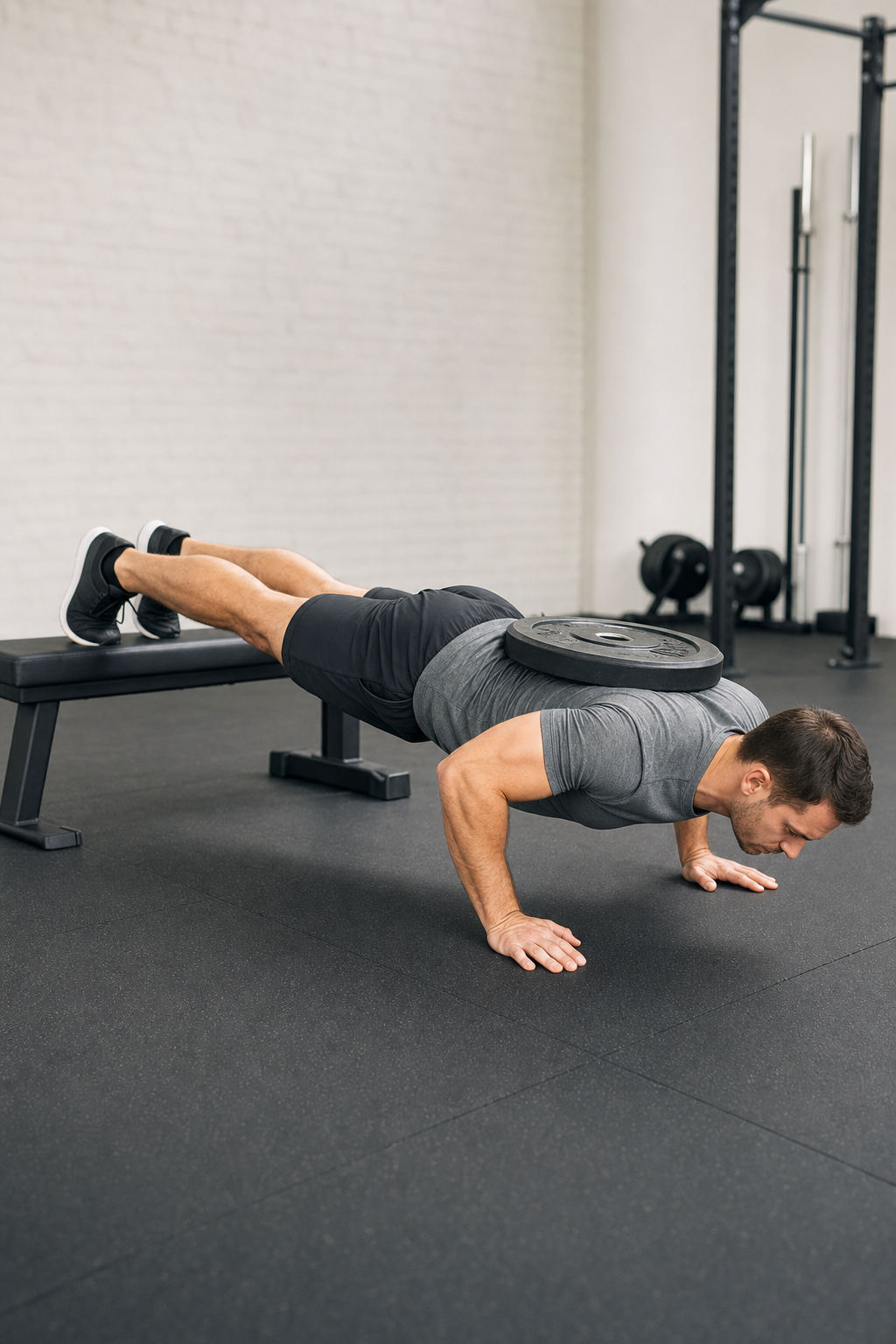
How to perform Weighted Decline Push-Up
- Place feet on elevated surface and hands on floor.
- Add weight securely to your upper back.
- Keep body straight, engage core.
- Lower chest to floor.
- Push back up powerfully.
- Repeat for reps, then carefully remove weight.
What is Weighted Decline Push-Up?
The weighted decline push-up combines elevated feet with external resistance to make a push-up substantially harder. A fitted weighted vest or securely anchored band is generally more stable than a loose plate, which can shift or fall as the body moves.
What muscles does Weighted Decline Push-Up work?
The upper chest, front deltoids, and triceps produce the press. The serratus anterior, rotator cuff, upper back, abdominal wall, glutes, quadriceps, forearms, and hands stabilize the loaded elevated plank.
Weighted Decline Push-Up form cues and common mistakes
- Master controlled unweighted decline push-ups before adding external resistance.
- Use a fitted vest or secured band when possible; do not balance an unsecured plate where it can slide toward the neck or floor.
- Choose a stable foot platform and have a safe way to remove the load before and after the set.
- Keep the trunk rigid, lower the chest between the hands, and press without bouncing or shortening the range.
- Stop the set if the load shifts, the hips sag, or the shoulders, wrists, elbows, or lower back become painful.
How to add Weighted Decline Push-Up to a workout
Use weighted decline push-ups as a strength-focused press after warming up with unweighted repetitions. Start with 3 to 5 sets of 4 to 10 reps, leaving 2 to 3 in reserve. Add small amounts of load only when setup, range, and control remain repeatable.
Frequently asked questions
What muscles do weighted decline push-ups work?
They emphasize the chest, front shoulders, and triceps while the upper back, serratus anterior, rotator cuff, core, glutes, legs, forearms, and hands stabilize the loaded plank.
What is the safest way to weight decline push-ups?
A fitted weighted vest or properly secured resistance band is usually more stable than a loose plate. Any load should stay fixed and allow a safe entry and exit.
How many weighted decline push-ups should I do?
Begin with 3 to 5 sets of 4 to 10 controlled repetitions. Use a load that leaves 2 to 3 good repetitions in reserve and never compromises the plank position.
Use controlled movement and an appropriate variation for your current ability. Stop if an exercise causes sharp pain, and seek qualified guidance when needed.